
Offshore Trust 'Thunder Prevention' Guide — An Equity Law Interpretation of Mrs. Zhang's Overseas Family Trust Being 'Pierced'
Offshore Trust 'Thunder Prevention' Guide — An Equity Law Interpretation of Mrs. Zhang's Overseas Family Trust Being 'Pierced'
Mrs. Zhang's overseas family trust was 'pierced' by Singapore High Court decision, causing widespread concern. This article provides an equity law interpretation of the case, analyzing why the trust was pierced based on resulting trust principles rather than 'excessive control' or 'settlor power boundaries' as commonly reported.
Introduction
Mrs. Zhang’s overseas family trust was “pierced” by Singapore High Court decision, causing widespread attention. Many have宣传ed risks like avoiding false trusts, preventing excessive control, and observing settlor power boundaries.
However, upon careful study of Singapore High Court [2022] SGHC 278 judgment, the author finds this case’s legal basis differs greatly from previous cases. Mrs. Zhang’s trust piercing was not explained by “excessive control” or “settlor power boundaries.”
This case is not only a hot topic but also a groundbreaking and landmark case in offshore trust new-type risk warnings and court decision rules.
I. Case Background, Facts, and Judgment
Background
Mrs. Zhang had dispute with private equity fund LDV regarding equity acquisition. LDV obtained CIETAC arbitral award of $142 million USD in 2019. LDV sought enforcement in Hong Kong, then Singapore.
Facts
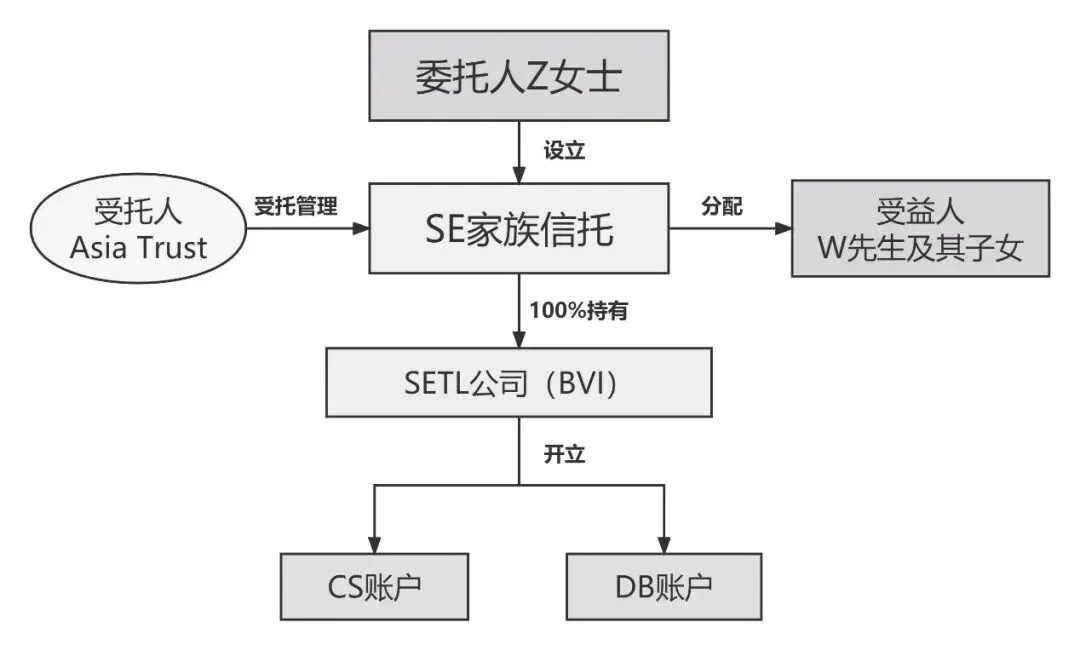
During 2013-2014, LDV paid Mrs. Zhang $250 million USD for restaurant company equity. In January 2014, Mrs. Zhang established SETL company in BVI, sole shareholder and director. SETL opened accounts at Credit Suisse and Deutsche Bank in Singapore. Mrs. Zhang transferred $140 million from her personal account to CS account, then $85 million to DB account.
June 3, 2014, Mrs. Zhang established SE family trust with son W as beneficiary, trustee Asia Trust Limited. June 4, 2014, Mrs. Zhang transferred her SETL shares to SE trust’s trustee Asia Trust.
Court Judgment
November 2, 2022, Singapore High Court held that although Mrs. Zhang indicated and facilitated SE family trust establishment and transferred SETL ownership to Asia Trust, she did not intend to relinquish but retained beneficial interest in CS and DB accounts’ funds. She was the beneficial owner of the two bank accounts’ funds, supporting plaintiff’s appointment of receiver.
II. Equity Law Analysis
A. Resulting Trust as Main Legal Basis
Unlike traditional piercing through “false trust,” “passive trust where trustee is mere conduit,” or “revocable fraud creditor trust,” this case’s main theoretical basis was “resulting trust.”
Types of Resulting Trusts
Megarry J in Re Vandervell Trusts divided resulting trusts into:
-
Presumed Resulting Trust: If party transfers property without intent to benefit transferee, presumed resulting trust arises for transferor.
-
Automatic Resulting Trust: When property transferred to trustee but not fully relinquishing equitable interest, resulting trust automatically arises for settlor as beneficiary. Based on equity maxim: “Equity does not allow a beneficial interest to be in suspense.”
Resulting Trust in This Case
In judgment, “resulting trust” appeared six times. The judge explicitly stated plaintiff relied on automatic resulting trust, not presumed resulting trust.
B. Key Issue Was Not ‘Actual Control’ But Equitable Ownership Under Resulting Trust
The judge’s core question was not “excessive control” but whether Mrs. Zhang had beneficial interest in the bank accounts.
Plaintiff’s claim based on Mrs. Zhang’s “actual control” was only one evidence element. The judge stated: “Evidence of actual control can support inference that person exercising actual control is ultimate beneficial owner, but actual control itself does not guarantee treating third party’s property as belonging to judgment debtor’s equitable assets.”
C. Whether Equitable Ownership of Bank Accounts Was Transferred Was Key Issue
Following Mrs. Zhang’s trust structure, CS and DB accounts were in SETL’s name. When SETL shares transferred to trust’s trustee Asia Trust, legal ownership transferred, but did equitable ownership also transfer? That was the key issue.
Plaintiff used bank documents and other evidence proving Mrs. Zhang retained beneficial interest. Judge ultimately found Mrs. Zhang intended to “retain beneficial ownership rather than hand over funds to SETL.”
III. New-Type Risk Warning: Asset Delivery Procedures for Composite Asset Trusts
This case向离岸家族信托实务界提示了一种新类型风险:要格外重视英美法系法域内复合资产信托下的资产交付手续.
Due to jurisdictional differences causing cognitive misalignment, merely transferring SETL company shares to Asia Trust did not automatically transfer bank accounts in SETL’s name. Under common law dual ownership concepts, transferring company shares does not necessarily extend to company assets.
Mrs. Zhang’s抗辩观点 that “professional advisors’ delay caused failure to timely change bank account sole signing authority” reflects that cognitive misalignment导致的资产交付手续延误客观存在.
The case reminds: when establishing offshore trusts in common law jurisdictions, must审视 trust documents’ transaction arrangements from dual ownership perspective. Not only focus on legal formalities at establishment, but also give格外重视 to actual delivery procedures for various trust assets, ensuring timely, lawful, effective completion of complete ownership transfer.