
The GENIUS Act Arrives: What Changes Await the Stablecoin Market?
The GENIUS Act Arrives: What Changes Await the Stablecoin Market?
The U.S. Senate has passed the GENIUS Act, aimed at regulating the rapidly growing stablecoin market. The Act brings "payment stablecoins" under regulatory oversight, stipulating that only licensed bank subsidiaries or qualified state/federal issuers may issue them, implementing a "state + federal" dual-track system. Core requirements include: stablecoins must be 100% backed by low-risk assets such as U.S. dollar cash and short-term Treasury bonds; issuers must strictly disclose reserve composition and redemption policies, and undergo regular audits; stablecoin holders enjoy priority repayment rights in bankruptcy liquidation; business scope is restricted and misuse of user data is strictly prohibited; issuers are subject to the Bank Secrecy Act, with enhanced anti-money laundering compliance, and non-compliant foreign stablecoins are strictly restricted from entering the U.S. The Act is expected to enhance market transparency, protect investor rights, and consolidate the dollar's position, but high compliance costs may increase market concentration, sparking debate on balancing financial innovation and risk regulation.

In recent years, the overseas cryptocurrency market has been booming, and stablecoins, as a special category within it, have experienced explosive growth, being widely used in scenarios such as cross-border payments and decentralized finance lending. However, as the scale of stablecoins continues to expand, problems arising from the lack of regulation have gradually emerged. Due to the absence of effective regulation, some criminals have used stablecoins for money laundering, illegal fundraising, and other illegal activities, severely disrupting financial order. To safeguard financial stability and investor rights, the U.S. has recently taken an important step in stablecoin regulation. On May 19, the U.S. Senate Banking Committee passed a key bill—the Guiding and Establishing National Innovation for U.S. Stablecoins Act (“GENIUS Act”[1]), which is currently pending review by the House of Representatives.

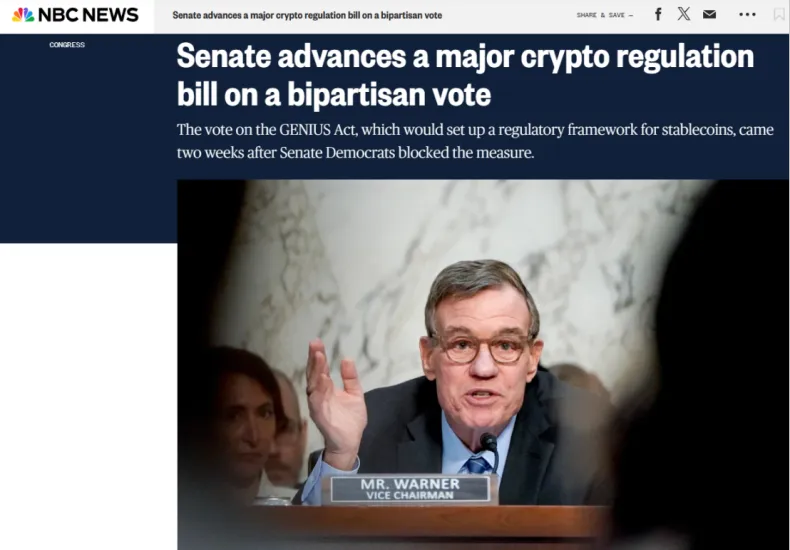
(Source: NBC NEWS)
1
What are the main common cryptocurrencies, and what is the payment stablecoin regulated by the GENIUS Act?
Currently, there are approximately 20,000 different types of cryptocurrencies in the international market. Before delving into the GENIUS Act, let us first understand the main types of cryptocurrencies.
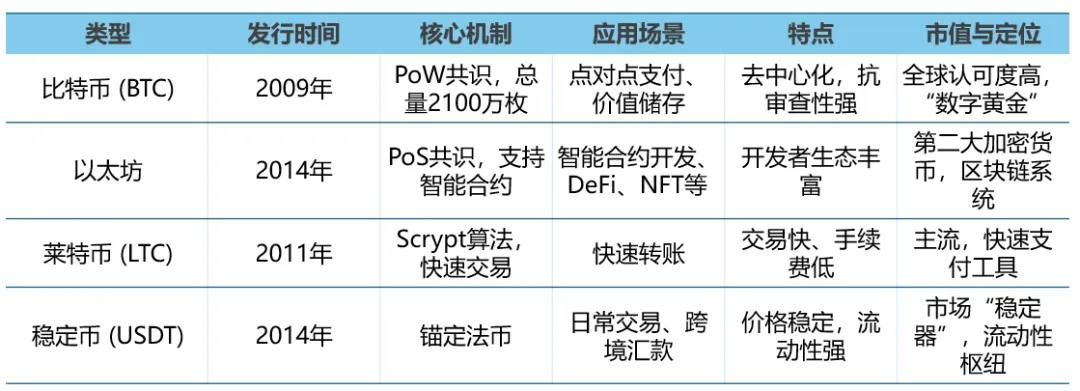
Stablecoins are the subject of the GENIUS Act’s legislative regulation. According to Section 2 of the GENIUS Act, the virtual currency it regulates is a “payment stablecoin,” defined as a digital asset designed to be used as a means of payment or settlement, where the issuer has an obligation to convert, redeem, or repurchase it at a fixed monetary value, and the issuer represents or reasonably expects to maintain its stable value relative to a fixed monetary value. Such digital asset is not national currency or a security.
In simple terms, stablecoins are typically pegged to fiat currency (such as the U.S. dollar, euro, etc.) or other real-world assets to maintain price stability. Taking the popular and widely used Tether (USDT) as an example, it is a stablecoin that maintains a 1:1 peg to the U.S. dollar through various mechanisms. Each Tether held by a user can be exchanged 1:1 for real U.S. dollars, thus avoiding the significant price fluctuations seen in cryptocurrencies like Bitcoin and Ethereum, and serving as a “stabilizer” in the cryptocurrency market.
2
Core Regulatory Points: Who Can Issue Coins? How to Issue?
The most critical part of the Act is the qualification review and conduct regulation of stablecoin issuers. Not all institutions can issue stablecoins; only approved issuers are entitled to issue payment stablecoins in the U.S., and the issuance process is also subject to regulation.
First, the types of qualified issuers include the following two categories:
1. Subsidiaries of Insured Depository Institutions:
These generally refer to banks or savings institutions that participate in the federal deposit insurance system. These institutions are already subject to relatively strict regulation within the traditional financial system and possess a certain reputation and capital strength foundation.
2. Qualified Payment Stablecoin Issuers:
This category is further divided into qualified payment stablecoin issuers at the federal level and the state level.
For the first category of issuers and the federal-level qualified payment stablecoin issuers within the second category, applications must be made to the Office of the Comptroller of the Currency (“OCC”). These institutions need to meet a series of regulatory requirements set by the OCC to ensure their ability to issue and manage stablecoins. Issuers choosing the federal path follow uniform federal standards in regulatory requirements and have no upper limit on issuance scale.
So what is different about state-level issuance? If the outstanding balance of a stablecoin is less than or equal to $10 billion, the issuer may choose to remain under a state regulatory system that the Secretary of the Treasury has determined to be “substantially equivalent.” “Substantial equivalence” here means that state regulatory standards must be consistent with the federal regulatory framework in core aspects, such as reserve requirements and information disclosure standards. However, if the issuance balance exceeds $10 billion, the issuer must upgrade to a federal license within 12 months of exceeding the limit, or take measures to reduce the issuance balance to below $10 billion.
Additionally, the Act imposes extra restrictions on large technology companies issuing stablecoins:
Non-financial giant enterprises wishing to issue stablecoins must establish a dedicated subsidiary to conduct this business. Such subsidiary must accept capital and prudential regulatory requirements equivalent to those of other issuers, and is strictly prohibited from misusing its own user data, thereby preventing large technology companies from leveraging their dominant position in other fields to create unfair competition or data security risks in the stablecoin market.
3
Want to Issue Coins? Need “Hard Cash” Backing
To ensure the value stability and redeemability of stablecoins, the Act strictly limits the types of reserve assets. It requires that stablecoins must have 100% reserve backing, and the reserves can only consist of the following “low-risk assets,” specifically including:
- U.S. dollar cash or funds in Federal Reserve bank accounts;
- Deposits held in banks or credit unions that are insured by the Federal Deposit Insurance Corporation;
- U.S. Treasury bills, notes, or bonds with a remaining maturity not exceeding 93 days;
- Funds obtained under overnight repurchase agreements collateralized by U.S. Treasury securities with a maturity not exceeding 93 days;
- Reverse repurchase agreements that are overnight and have appropriate collateral, where the payment stablecoin issuer acts as the reverse repurchase party;
- Securities issued by investment companies that invest solely in the assets described in items 1 through 5 above;
- Other similar government-issued assets approved by the regulatory authority;
- Any form of tokenized reserves, provided such reserves comply with all applicable laws and regulations.
It is important to note that reserve assets must not be misappropriated or rehypothecated, and may only be used in very limited circumstances, such as participating in low-risk operations like using reserve assets as collateral in Treasury repurchase transactions to meet redemption demands.
4
What Efforts Has GENIUS Made to Protect Investors’ Wallets?
1. Information Disclosure Requirements
Issuers of payment stablecoins must comply with strict information disclosure requirements to ensure transparency and user trust. The content to be disclosed includes the redemption policies, reserve status, and periodic audit reports that users care about most. The details are summarized as follows:
- Public Redemption Policy:
The issuer must clearly state and publicize its redemption policy, allowing users to understand how to exchange payment stablecoins for fiat currency or other equivalent assets.
- Establishment of Redemption Procedures:
The issuer needs to develop and publish procedures for handling redemption requests in a timely manner, ensuring users can redeem payment stablecoins at any time.
- Monthly Publication of Reserve Composition:
The issuer must publish the detailed composition of its reserves on its official website every month, including the total number of issued payment stablecoins and the specific amount and composition of reserves. These reserves may include U.S. dollar cash, demand deposits, short-term U.S. Treasury bonds, repurchase agreements, reverse repurchase agreements, and money market funds, etc.
- Regular Audits:
The issuer must regularly engage independent accountants on a monthly and quarterly basis to review the disclosed information, and annually engage professional audit firms to conduct comprehensive and in-depth financial audits.
2. Priority Repayment Rights
Typically, if a stablecoin issuing company goes bankrupt and enters liquidation, the order of payment would be: secured bank loans, administrative expenses such as lawyers’ fees from the bankruptcy process, employee wages, etc., and only then would ordinary investors be paid—potentially receiving nothing. However, Section 11 of the Act, concerning “Priority of Stablecoin Holders,” clearly provides that users holding payment stablecoins enjoy priority repayment rights over all other creditors, greatly safeguarding investors’ asset security. That is, during bankruptcy liquidation, stablecoin reserve assets should first be used to satisfy holders’ redemption demands, with priority over the issuer’s other general claims. This provision fills a previous gap in bankruptcy protection for stablecoins, providing some degree of security for investors’ funds when facing extreme risks.
3. Business Activity Restrictions
According to Section 4 of the Act, the issuer’s business scope is limited to activities directly related to the issuance and redemption of stablecoins, including managing reserve assets and providing custody services for stablecoins and their private keys. Restricting the business scope of issuers helps focus their efforts and resources on core business activities, avoids risks arising from excessive diversification, facilitates targeted supervision by regulatory authorities, and protects consumer rights.
5
Anti-Money Laundering and Compliance Requirements: How to Prevent Stablecoins from Being Used for Illegal Activities Such as Money Laundering?
As mentioned earlier, due to the previously relatively loose financial regulatory requirements, cryptocurrencies have often been used as tools for money laundering and illegal fundraising. Therefore, anti-money laundering and compliance requirements form a significant part of the GENIUS Act. To strengthen supervision in this area, the Act includes stablecoin issuers within the definition of “financial institutions” under the Bank Secrecy Act (“BSA”). This means that stablecoin issuers must adhere to strict standards similar to traditional financial institutions in terms of anti-money laundering and compliance. Furthermore, Section 8 of the Act stipulates that payment stablecoins issued by foreign payment stablecoin issuers may not be publicly offered, sold, or otherwise transacted in the U.S., unless such foreign issuer has the technical capability to comply with and actually complies with any lawful order provisions. Violations may result in sanctions such as cease-and-desist orders and civil penalties. The Act also solicits public comments to identify innovative or novel methods used or potentially usable by regulated financial institutions to detect illegal activities such as money laundering involving digital assets, including application programming interfaces, artificial intelligence, digital identity verification, and the use and monitoring of blockchain.
6
Provisions for Foreign Issuers: Can Non-U.S. Companies Issue Coins?
To prevent unregulated foreign stablecoins from flooding and disrupting the U.S. domestic market and harming investor interests, the Act prohibits foreign issuers from publicly issuing, offering, or trading stablecoins in the U.S., but foreign issuers may be exempted under specific conditions. According to Section 18 of the Act, foreign issuers may issue coins in the U.S. if they meet the following conditions:
- The foreign issuer is subject to regulation by a foreign regulatory authority, and such regulatory framework is recognized by the U.S. Treasury Department as equivalent to the requirements of the GENIUS Act, such as having the technical means to freeze illegal transactions and committing to comply with U.S. lawful orders;
- The foreign issuer registers with the OCC in accordance with regulations;
- The foreign issuer holds sufficient reserves at a U.S. financial institution to meet the liquidity needs of U.S. customers.
Even so, foreign issuers are subject to ongoing OCC supervision. If the OCC determines that an issuer has failed to comply with the Act’s requirements (e.g., insufficient reserves or illegal financial risks), it may revoke its registration. Foreign issuers that knowingly provide payment stablecoins in the U.S. face a maximum fine of $1 million per day, and the Secretary of the Treasury may seek an injunction prohibiting them from conducting financial transactions in the U.S.
6
What Reactions Has the GENIUS Act Triggered? What Changes Will It Bring?
1. Genuine Attitudes from All Sectors: Support and Concerns Coexist
The introduction of the GENIUS Act has sparked intense discussion across various sectors in the U.S. First, both parties are increasingly aware of the necessity of legislation for payment stablecoins, but some lawmakers and economists still express concerns about the potential risks that payment stablecoins pose to monetary policy, financial stability, and illegal financial activities. Some professionals believe the Act is a positive step toward regulatory clarity, providing a clear path for state and federal regulation, recognizing the role of state regulators in overseeing digital asset companies, while ensuring that large issuers are subject to mandatory federal regulation. Furthermore, the Act’s focus on interoperability and compatibility standards may enhance the competitiveness of U.S. payment stablecoins in the global digital asset market, reduce legal uncertainty, and thereby promote broader adoption of payment stablecoins. However, others worry that the licensing and reserve requirements in the Act may impose excessive regulatory burdens on some issuers, particularly those of certain widely used existing stablecoins[2].
2. Three Major Potential Impacts of the Act
- If the Act is successfully implemented, it may strengthen the dollar’s position.
If effectively implemented, the Act could enhance global trust in the digital dollar by providing a regulatory basis for payment stablecoins backed by U.S. dollar-denominated assets, benefit the broader U.S. financial system, and encourage payment stablecoin issuers to remain in the U.S.
- The “State + Federal” dual regulatory framework can balance the double-edged sword of innovation and risk.
The “state + federal” dual regulatory framework provides room for innovative small companies to experiment while keeping major players within the regulatory cage, preventing chaos in the cryptocurrency market. This dual-framework approach promotes innovation while mitigating risks. However, it may lead to difficulties in maintaining consistency between state and federal regulations—for example, a business permitted in one state might be shut down at the federal level—potentially significantly increasing issuers’ “coordination costs.”
- Challenges and Controversies: Will Compliance Costs “Scare Away” Innovation?
Although the Act’s intent is good, practical implementation may encounter resistance. For instance, stablecoins issued by small companies may exit the market due to high compliance costs, and the future stablecoin market may be monopolized by large institutions, limiting innovation space.
Intern Shen Zidan contributed to this article.
References:
[1]https://www.congress.gov/bill/119th-congress/senate-bill/1582/amendments
[2]https://www.jonesday.com/en/insights/2025/02/stablecoin-legislation-a-stroke-of-genius