Dissolving Corporate Deadlock: Summary of Judicial Procedures for Company Dissolution Actions
Dissolving Corporate Deadlock: Summary of Judicial Procedures for Company Dissolution Actions
With the development of company registration, many companies face deadlock situations. This article summarizes the procedural aspects of company dissolution litigation, covering standing, statutory grounds, jurisdiction, evidence preservation, and practical strategies.
I. Standing to Sue
1. Plaintiffs: Shareholders Holding 10%+ Voting Rights
The court determines shareholder qualification based on registered shareholder records. Nominal shareholders (隐名股东) not registered on shareholder registers generally cannot directly sue for dissolution. They must first obtain judicial confirmation of their shareholder status through separate proceedings.
2. Defendants: The Company
The company dissolution action is a change action (变更之诉) against the company. Other shareholders may be joined as third parties.
3. Third Parties: Other Shareholders
The court may notify other shareholders as third parties, particularly given the mediation requirements under the司法解释.
II. Statutory Grounds for Dissolution
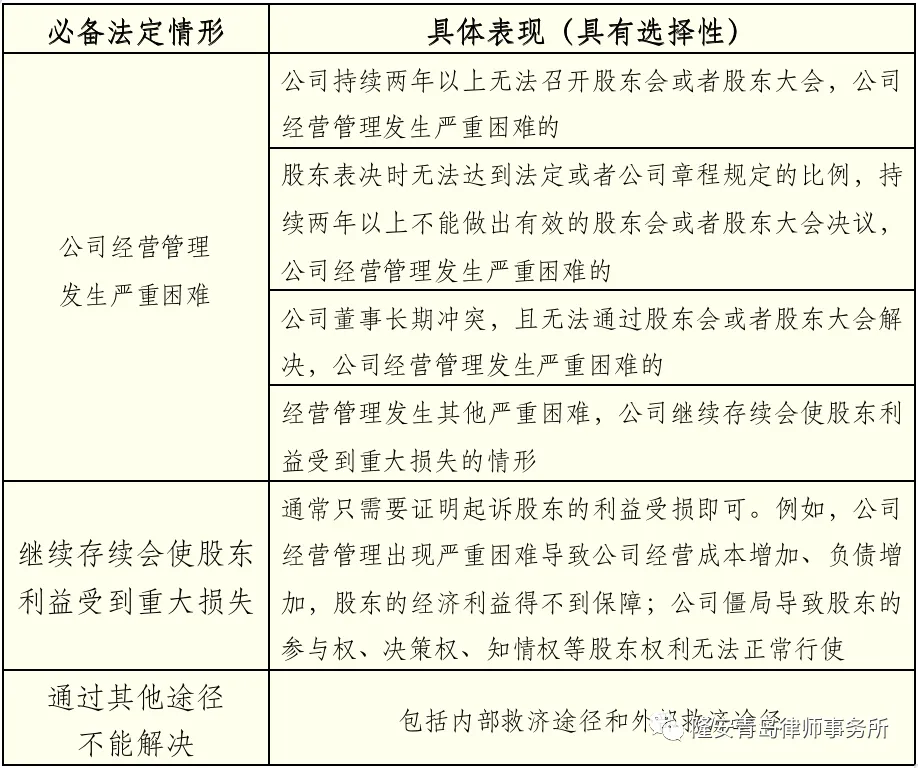
Under司法解释(二) Article 1 and Company Law Article 182, courts may order dissolution when:
- Company business management suffers serious difficulties
- Continued existence would cause significant loss to shareholders
- Deadlock from shareholder disputes cannot be resolved
- Other remedies have failed
1. Business Management Difficulties
Courts examine whether the governance structure (shareholder/director deadlock) has completely lost function.
2. Exhaustion of Other Remedies
Courts conduct formal review of whether other remedies were attempted. Shareholders should demonstrate in pleadings and evidence that reasonable alternative methods were exhausted.
III. Jurisdiction
1. Territorial Jurisdiction
Company dissolution cases are heard by the people’s court at the company’s domicile. Domicile means the primary place of business; if unclear, the registered location.
2. Level Jurisdiction
- Companies registered with county/city/district authorities: Basic people’s courts
- Companies registered with regional/municipal authorities or above: Intermediate people’s courts
IV. Evidence Preservation
Under司法解释(二) Article 3, shareholders may apply for property or evidence preservation by providing security and demonstrating necessity.
1. Purpose of Preservation
Preservation serves:
- Protecting plaintiff interests from asset transfer during proceedings
- Facilitating potential mandatory liquidation post-dissolution
2. Scope Determination
Courts generally defer to applicant-proposed amounts, considering factors including the applicant’s recoverable share, security capacity, and normal business operations.