System Integration Path for Enterprise Trade Secret Legal Protection
System Integration Path for Enterprise Trade Secret Legal Protection
This article analyzes the system integration path for enterprise trade secret legal protection, examining current legal framework developments, practical guidance for protecting one's own secrets, avoiding infringement of others' secrets, implementing infringement remedies, and responding to accusations. It also interprets the Shanghai Technology Exchange's Enterprise Trade Secret Asset Confirmation Management Guidelines.
I. Problem Statement
Strengthening trade secret protection is an important task in anti-unfair competition and IP protection. It promotes innovation, maintains fair competition, optimizes the business environment, and supports high-quality economic development.
According to the “China Courts IP Judicial Protection Status (2021)” white paper, in 2021, 61 criminal trade secret infringement cases were concluded, an increase of 16 from 2020. The Supreme People’s Court IP Tribunal received 12 technical secret dispute cases in 2019, 44 in 2020, and 79 in 2021.
II. Key Legal Developments
1. Policy Framework
- 2021: Central Committee and State Council “IP Power Nation Construction Outline”
- 2021: “14th Five-Year” National IP Protection and Utilization Plan
- 2022: SAMR “National Trade Secret Protection Innovation Pilot Work Plan”
- 2023: National Trade Secret Protection Innovation Pilot launch
2. Judicial Developments
- 2020: SPC “Provisions on Civil Cases of Trade Secret Infringement”
- 2020: SPP and MPS “Decision on Revising Criminal Case Filing Standards”
- 2021: Beijing IP Court “Trade Secret Civil Case Litigation Evidence Guidelines”
III. Practical Guidance
1. Protecting Own Trade Secrets
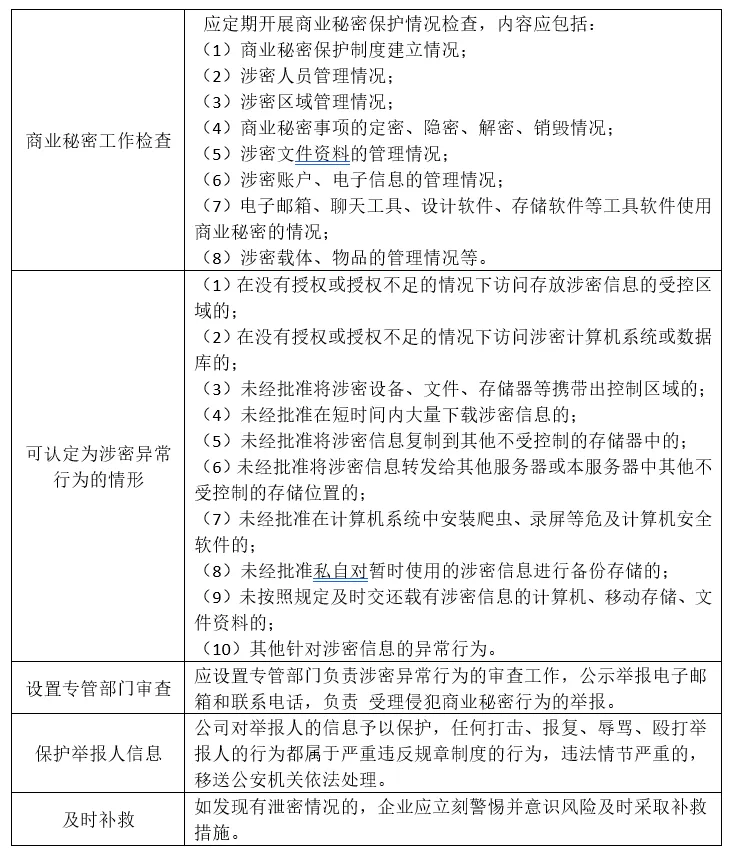
Systematic measures: Establish dedicated management departments, implement protection systems, incorporate confidentiality into employee handbooks.
Process measures: Establish technical confidentiality processes and employee departure procedures.
Contractual measures: Include confidentiality clauses in labor contracts, sign confidentiality and non-compete agreements with key employees.
2. Avoiding Infringement of Others’ Secrets
Institutional measures: Establish internal rules preventing infringement.
Personnel measures: Conduct thorough background checks on candidates for sensitive positions.
Training measures: Ensure employees understand anti-unfair competition law provisions.
3. Implementing Infringement Remedies
Criminal prosecution: File complaints with public security under Criminal Law Article 219.
Administrative complaint: Report to administrative authorities for market supervision.
Civil litigation: File suit in competent courts, seek preliminary injunctions where appropriate.
4. Responding to Infringement Accusations
Preparation: Develop response guidelines, conduct compliance training.
Case analysis: Retain professional counsel for case analysis and risk assessment.
Evidence preservation: Conduct computer software evidence preservation, coordinate with technical experts.
IV. Four-System Integration Modules
Based on the Shanghai Technology Exchange “Enterprise Trade Secret Asset Confirmation Management Guidelines” (effective August 1, 2022):
1. Trade Secret Rights Confirmation Module
2. Trade Secret Human Resource Management Module
3. Trade Secret Information Management Module
4. Trade Secret Rights Remedy Module