
A 10,000-Word Technical Analysis of the First AI Copyright Case | Who Owns Computing Power, Who Monopolizes the Future of AI Copyright in China?
A 10,000-Word Technical Analysis of the First AI Copyright Case | Who Owns Computing Power, Who Monopolizes the Future of AI Copyright in China?
Attorney LI Boyang critiques the first judgment by the Beijing Internet Court recognizing copyright ownership for an AI image user. Starting from the underlying algorithm of Stable Diffusion, the author points out that AI image generation is essentially a deterministic "mechanical intellectual achievement" based on prompts, parameters, and random seeds. The user merely selects from the massive pre-generated results of the model without engaging in substantive creative intellectual input. The author argues that this judgment confuses tool operation with creative behavior, not only contradicting the natural attribute of automatic copyright generation but also potentially leading to computing power monopolies, blurring the boundary between protecting the creative process versus the result, and creating unfair discrimination among users of different AI tools. The author contends that purely AI-generated works without substantive secondary creation do not meet the requirements for copyright protection, and intellectual property law should be reconstructed based on technological essence. Accordingly, the plaintiff should not have copyright in the image in question, and the defendant's conduct did not constitute infringement.
On November 29, 2023, a judgment from the Beijing Internet Court exploded across the legal community.
China finally issued its first judgment on the copyright ownership and infringement determination of “AI-generated images.”
The author carefully studied the judgment immediately but holds certain dissenting views on the court’s findings.
The judge held that as long as there is “designing the presentation of characters, selecting prompts, arranging the order of prompts, setting relevant parameters, and selecting images that meet expectations,” the generated work could satisfy the element of “intellectual achievement,” and the user could have copyright in the output.
If one is familiar with AI and the principles of Stable Diffusion software, one can deduce from this judgment a stark reality: In the future, whoever has enough computing power can monopolize the copyright of AI-generated art works in China.
Unlike other peers who only analyze the judgment itself, the author will attempt to analyze from a technical perspective, hoping to provide readers with a different angle and experience.
I. Brief Summary of the Judgment
I believe many readers have seen or heard about the content of the judgment, but for the convenience of later reading, the author provides a brief summary here.
Facts of the Case
Plaintiff Li used Stable Diffusion software (an AI drawing software) to generate the image in question and published it on Xiaohongshu (Little Red Book). Defendant Liu, a Baidu Baijiahao blogger, used the AI image in his blog post without the plaintiff’s permission and after removing the plaintiff’s watermark signature on Xiaohongshu, causing relevant users to mistakenly believe that the defendant was the author of the work.
After discovering this, the plaintiff filed a lawsuit with the Beijing Internet Court, requesting:
-
A judgment ordering the defendant to publish a public statement on the involved Baijiahao account apologizing to the plaintiff and eliminating the impact caused by the infringement;
-
A judgment ordering the defendant to compensate the plaintiff for economic losses of RMB 5,000.
The plaintiff also demonstrated in court how to use Stable Diffusion software to reproduce the AI image step by step.
Court Findings
(1) Whether the Image in Question Constitutes a Work, and What Type of Work
Regarding “Intellectual Achievement”:
From the beginning of the plaintiff’s conception to the final selection of the image, the plaintiff made certain intellectual investments, such as designing the presentation of characters, selecting prompts, arranging the order of prompts, setting relevant parameters, and selecting images that met expectations. The image embodies the plaintiff’s intellectual input, thus meeting the element of “intellectual achievement.”
Regarding “Originality”:
The plaintiff designed the visual elements such as characters and their presentation through prompts, and set the composition and layout of the image through parameters, reflecting the plaintiff’s selection and arrangement. On the other hand, after obtaining the first image by inputting prompts and setting parameters, the plaintiff continued to add prompts, modify parameters, and make continuous adjustments and corrections, ultimately obtaining the image in question. This process of adjustment and correction also reflects the plaintiff’s aesthetic choices and personal judgment.
Therefore, the image in question is not a “mechanical intellectual achievement.” In the absence of contrary evidence, it can be determined that the image was independently completed by the plaintiff and reflects the plaintiff’s personalized expression. In summary, the image meets the element of “originality.”
Regarding Whether It Constitutes a “Mechanical Intellectual Achievement”:
The plaintiff generated different images by changing individual prompts or individual parameters, demonstrating that different people can input new prompts and set new parameters using this model to generate different content. Therefore, the image is not a “mechanical intellectual achievement.”
(2) Whether the Plaintiff Has Copyright in the Image
1. The Model:
Since China’s copyright law recognizes “authors” only as natural persons, legal persons, or unincorporated organizations, the model used to generate the image cannot be an “author.”
2. The AI Software (Author of Stable Diffusion):
Since it had no intention to create the image, did not pre-set subsequent creative content, and did not participate in the subsequent creative process, it is merely a producer of the creative tool.
3. The Plaintiff:
The plaintiff directly made relevant settings for the AI model as needed and ultimately selected the image in question. The image was directly generated based on the plaintiff’s intellectual input and reflects the plaintiff’s personalized expression. Therefore, the plaintiff is the author of the image and holds its copyright.
(3) Whether the Sued Conduct Constitutes Infringement and Whether the Defendant Should Bear Legal Liability
The defendant’s act of disseminating the image constitutes infringement of the plaintiff’s “right of information network dissemination.”
The defendant’s act of removing the plaintiff’s signature when disseminating the image constitutes infringement of the plaintiff’s “right of authorship.”
Judgment
-
The defendant must publish an apology statement on its Baijiahao account, maintained for at least 24 hours;
-
The defendant shall compensate the plaintiff for losses of RMB 500.
II. Analysis of Why the Copyright Determination in This Case Is Insufficient Based on SD Software Principles
(1) Operating Principles of Stable Diffusion Software and Its Model
The author has previously discussed the algorithmic principles behind Stable Diffusion software. Interested readers can refer to:
Briefly, the Diffusion algorithm works by associating materials in the training set with their corresponding annotation information, enabling the algorithm model to learn these associations and understand the common patterns of training set images with the same annotation information. During training, by simulating various possibilities of distributed pixel points (i.e., “paths”), the model generates images that satisfy these common patterns. During the generation phase, our input requirements (i.e., “prompts”) match the annotation information from training, seeking the generation path that best represents the images corresponding to such annotation information, ultimately generating an image that matches the prompt content.
The “seed” parameter in Stable Diffusion software represents a specific “path.”
(2) Using the Same “Path” Will Always Produce the Same Result
From the judgment, we learn that the plaintiff demonstrated in court that by re-entering relevant positive and negative prompts, iteration steps, LoRA model weights, and other parameters, with the “seed” fixed, the image in question was regenerated.
This actually means that the image is essentially a “mechanically generated” result based on fixed parameters.
“Reproducibility” is also the biggest feature that distinguishes Stable Diffusion from other AI generation software (such as Midjourney, DALL·E, etc.).
On the well-known AI model sharing website Civitai, a large number of users share AI images. These images all include the specific model used (Resources) and the parameters used during generation (Generation Data). The website also provides a “one-click copy” function for parameters.
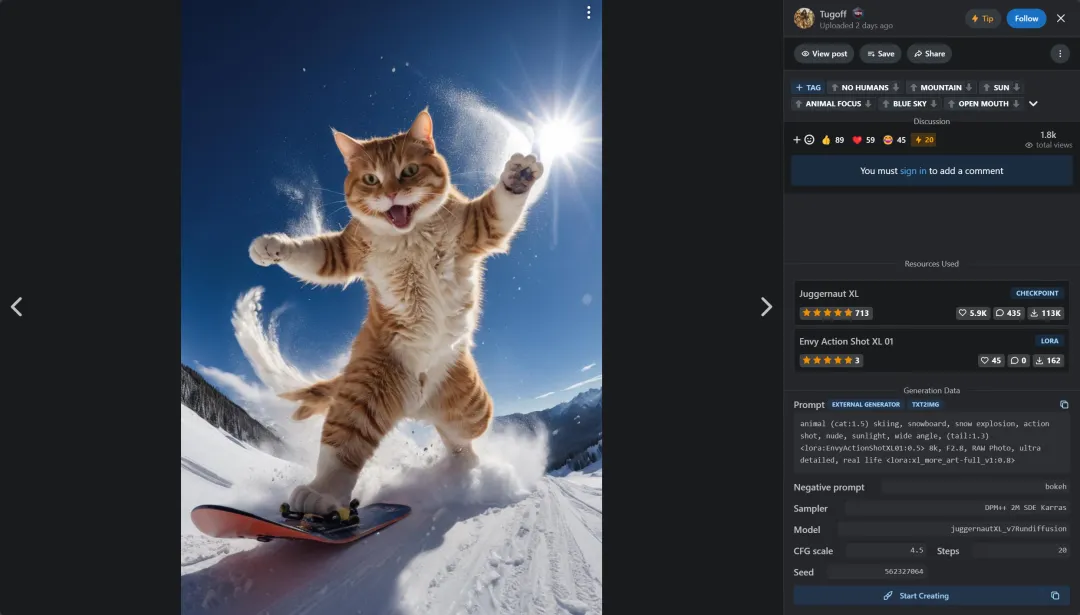
(Model sharing page)
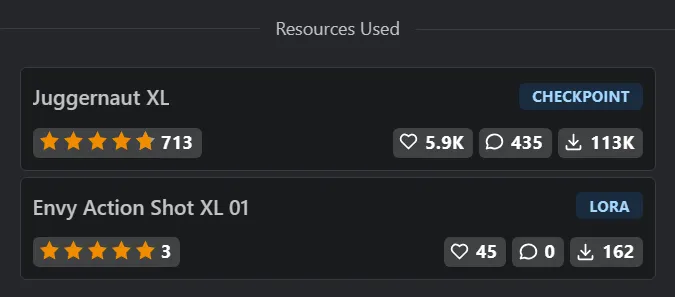
(Model used for the image)
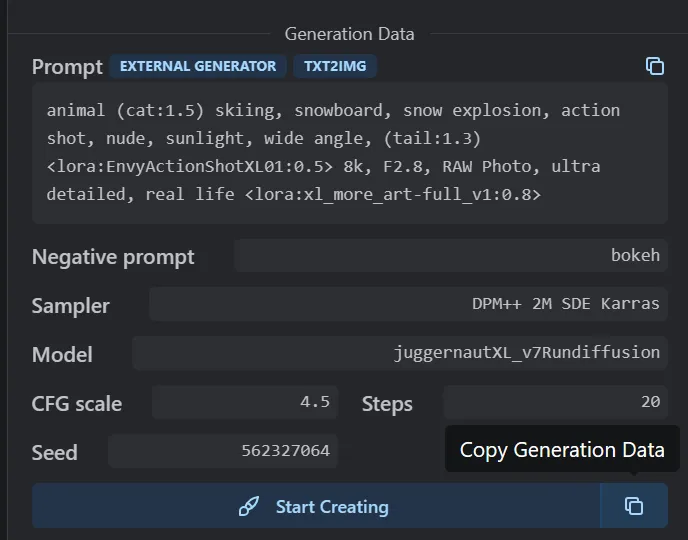
(Generation parameters used for the image)
By pressing the copy button, the following generation parameters can be obtained:
animal (cat:1.5) skiing, snowboard, snow explosion, action shot, nude, sunlight, wide angle, (tail:1.3)8k, F2.8, RAW Photo, ultra detailed, real life
Negative prompt: bokeh
Steps: 20, VAE: sdxl_vae.safetensors, Size: 832x1216, Seed: 562327064, Model: juggernautXL_v7Rundiffusion, Version: v1.6.0-2-g4afaaf8a, Sampler: DPM++ 2M SDE Karras, VAE hash: b3165c12ca, CFG scale: 4.5, Model hash: 0724518c6b, “EnvyActionShotXL01: 46f3acce826a, xl_more_art-full_v1: fe3b4816be83”
Other users only need to download and use the same model, import the above generation parameters with one click in the software interface, and they can reproduce this image on their own devices.
Although due to differences in computer hardware, software plugin versions, model versions, etc., the final result may not be 100% identical, the generated result is sufficient to constitute “substantial similarity.” Below are some test images from netizens:
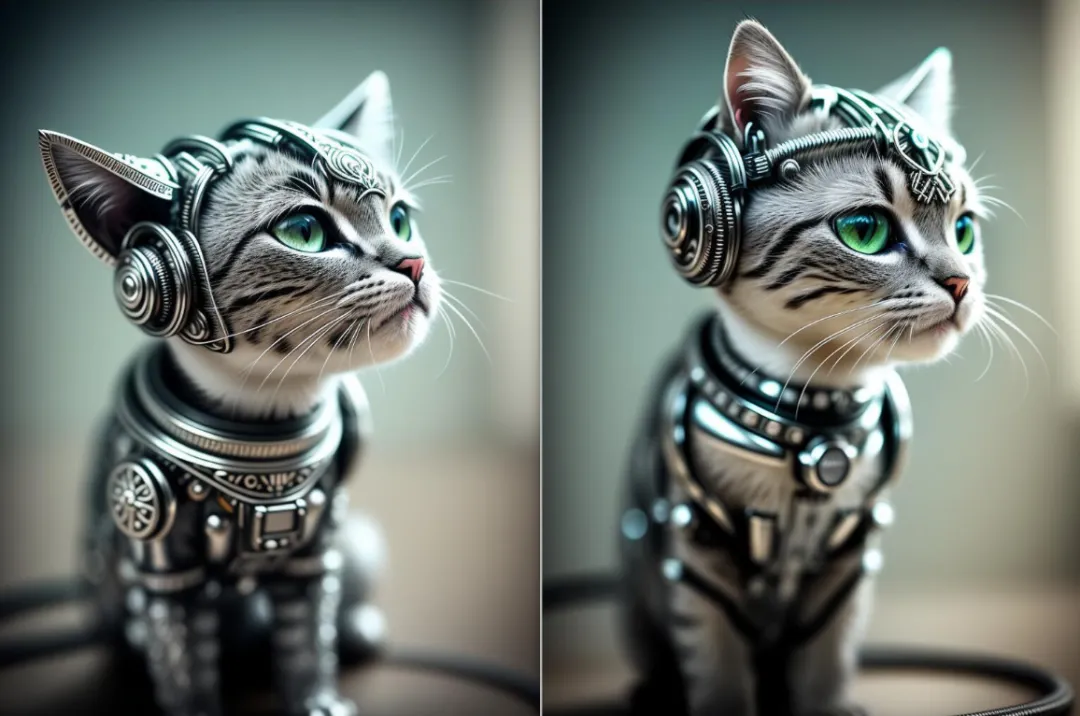
(Source: https://www.tonyisstark.com/869.html)
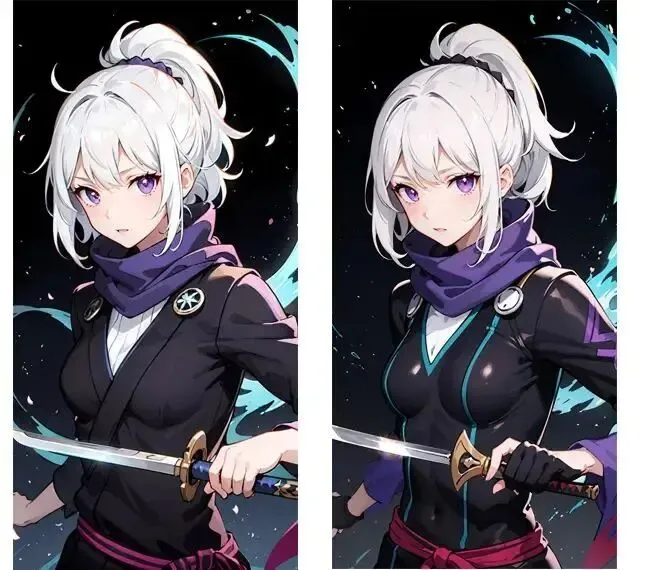
(Source: https://www.bilibili.com/read/cv23375108/)
Based on the parameters recorded in the judgment, despite not knowing the software version, plugins, hardware device, and certain undisclosed parameters, the author was able to reproduce the following result on his own computer. Apart from the body, the face, background, and lower body clothing show obvious similarities, and the overall composition is also very similar:
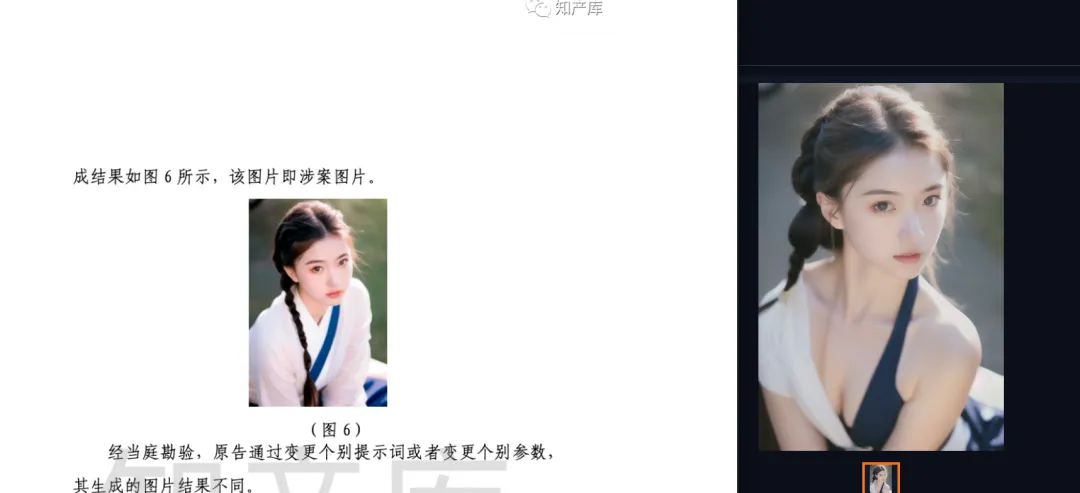
When the factors affecting the result are sufficiently limited, the generated result can achieve 100% similarity, as demonstrated in the plaintiff’s reproduction process.
To further illustrate, the author documents a test result here:
- After inputting various basic generation parameters in Stable Diffusion, keep the random seed as -1 (i.e., randomly generate seed, which is the normal process for generating AI images — in actual use, one would hardly fix the seed first and then adjust parameters), and click image generation.

- Obtain the first generation result and its seed parameters:
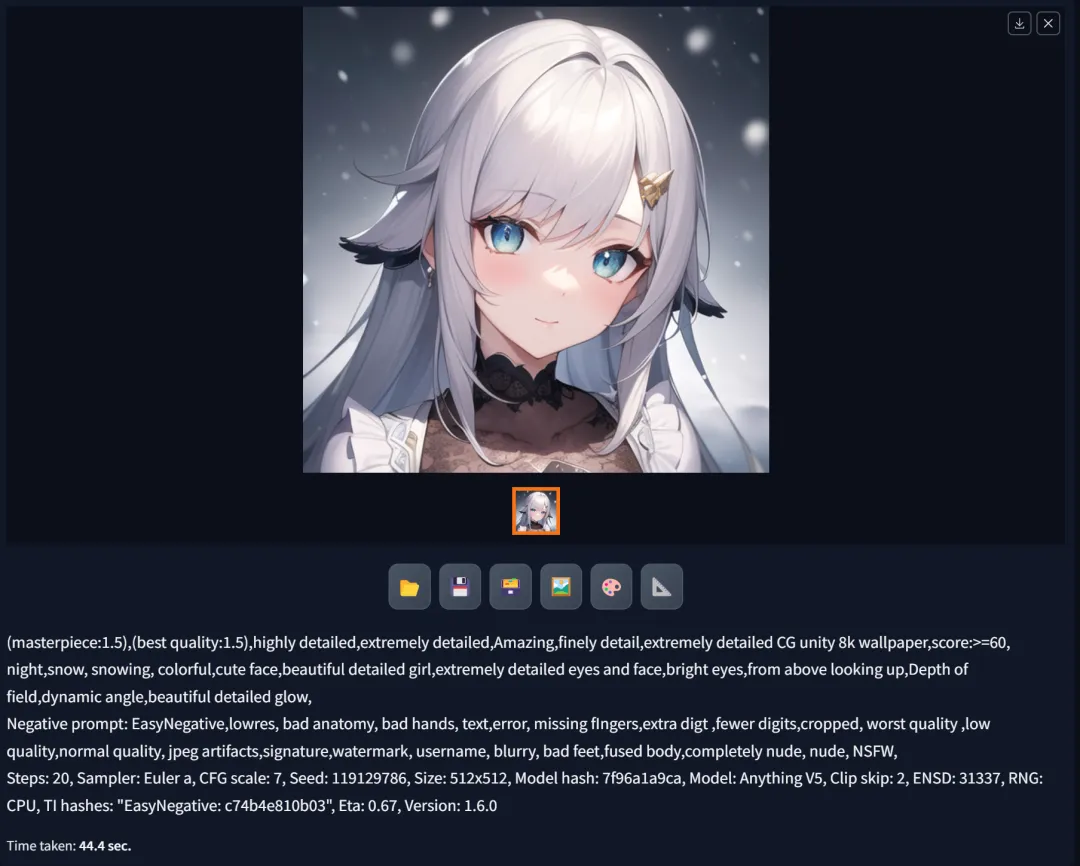
- Restart the software, input the same parameters again, modify the seed parameter to be consistent with the result from step 2, and click generate again:

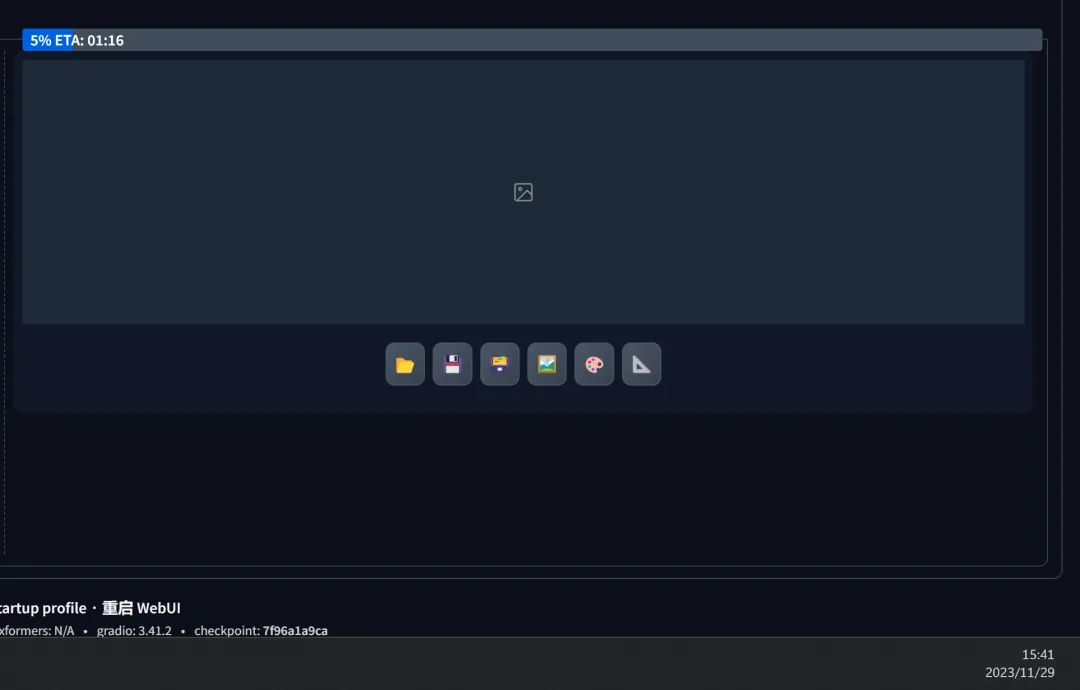
- Obtain an identical image:
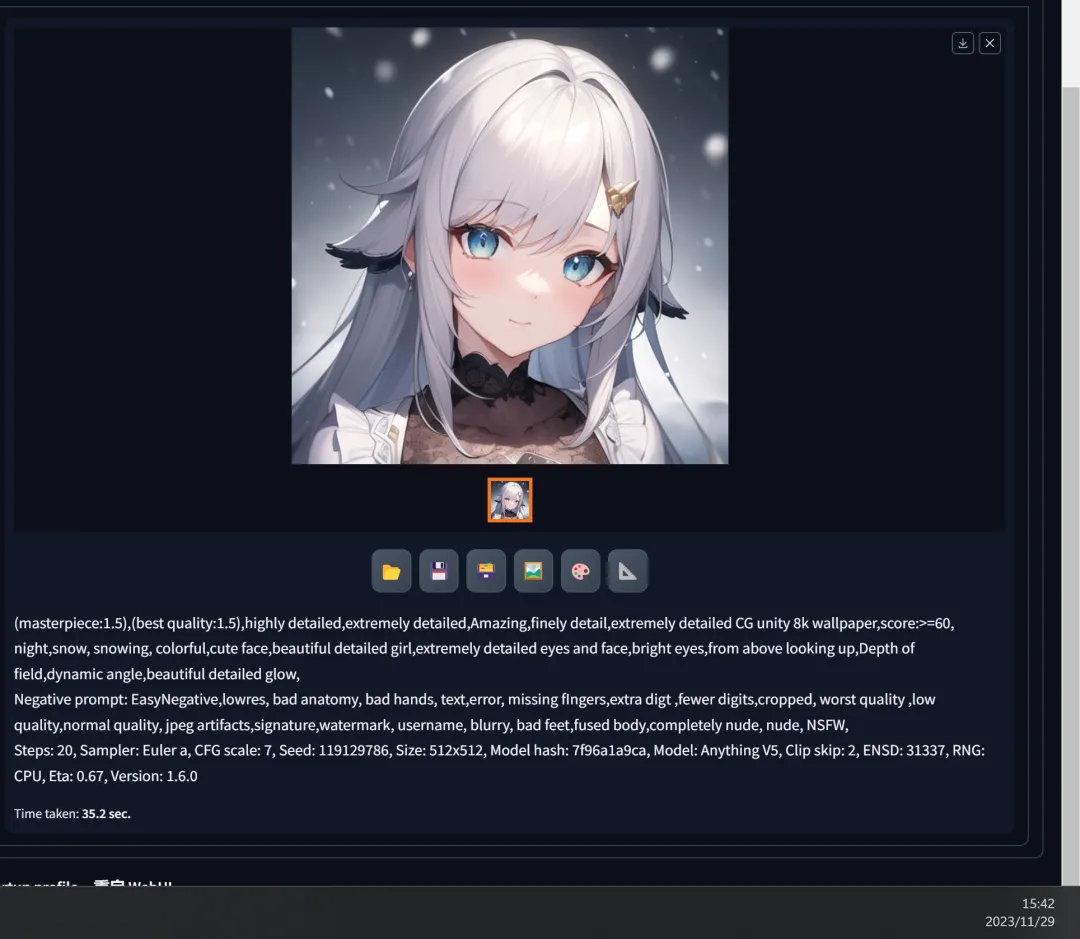
It can be seen that when using the same model and generation parameters, using the same ‘seed parameter’ can generate images that reach ‘substantial similarity’ or even ‘identical’ results.
(3) AI-Generated Images Are Merely “Mechanical Intellectual Achievements” Calculated Through Specific Methods
Whether it is the reproduction process demonstrated by the plaintiff in the case or the test results above, they all point to one fact:
The so-called ‘AI drawing’ is merely a process of selecting a specific result from the immense number of possibilities generated during model training, based on calculations using algorithmic formulas combined with input parameters, to produce the corresponding image.
The various adjustments made by the plaintiff during the reproduction process are essentially unrelated to the final result. The process of adjusting parameters merely points to different generation results of the model. As long as the final input parameters are consistent with those used to generate the image, regardless of how many adjustments were made beforehand, the final result will not change — as fixed and accurate as 1+1=2 in a normal environment.
As elaborated in the judgment regarding “mechanical intellectual achievements”:
Regardless of who the generator is, using the same equipment, selecting the same model, inputting parameters in a certain order, and clicking the mouse, the resulting AI image will necessarily be identical, having no relationship whatsoever with the person, time, or place of the mouse click.
‘AI-generated images,’ at least at the current stage, are merely ‘mechanical intellectual achievements.’
(4) We Are Merely “Selecting Monkey Selfies”
In this case, the judge considered that the plaintiff’s process of adjusting and modifying parameters reflected the plaintiff’s aesthetic choices and personal judgment.
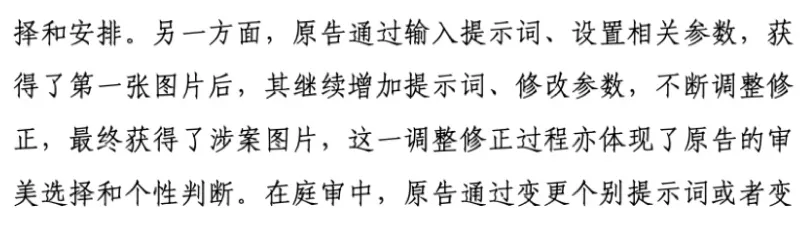
However, through the discussion above, we can now determine that the plaintiff (and indeed all of us using AI drawing) is merely selecting an image that conforms to human aesthetics from a pile of ‘mechanical intellectual achievements.’
The judge used the example of a “camera” in the judgment. Here, the author would also like to cite another “camera” example:
In 2011, British photographer David Slater was conducting photography activities in the Indonesian wilderness. During the shoot, he fixed his camera on a tripod and deliberately moved away from the remote shutter, allowing a black macaque to approach the camera. A female black macaque pressed the remote shutter, taking a large number of photos, most of which were blurry and unusable. However, Slater selected the two most interesting photos and published them on a website:
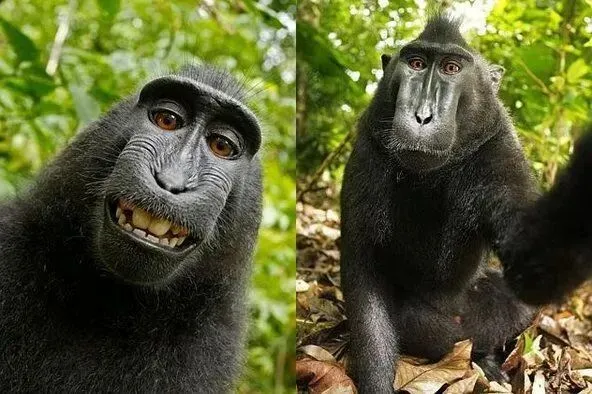
Wikipedia placed these two photos on its website, stating they were “taken by a monkey.” Slater believed Wikipedia infringed his copyright and sued Wikipedia’s parent company. In December 2014, the US Copyright Office determined it was indeed “taken by a monkey,” stating that works not created by humans are not subject to US copyright. In 2016, a US federal judge decided that the monkey could not hold copyright in these images. In 2018, the Ninth Circuit Court of Appeals affirmed. If we analogize to this case, the plaintiff’s conduct is no different from Slater’s — the essence is merely selecting from a pile of works not created by humans. The plaintiff’s process of adjusting parameters is merely “changing gestures inside a black box full of various images to draw out one particular image,” and this image essentially has no “creative” element added by the person.
As the common term for “AI drawing” goes: “card drawing” (抽卡). We would neither consider the process of a lottery (even if we set the possible types, colors, sizes, shapes, probabilities, etc. of the prizes ourselves as “parameters”) to be a “creative process,” nor would we consider the prize we draw to be a “work” for which we hold copyright. Similarly, we should not recognize that the “lottery participant” has copyright in the “work” “drawn” during “AI drawing.”
(5) Even the Prompts Do Not Contain the Elements of “Creation”
Readers familiar with Stable Diffusion software may know that there are many prompt plugins available online, and many netizens share various practical prompt templates on prompt sharing websites, forums, and blogs.
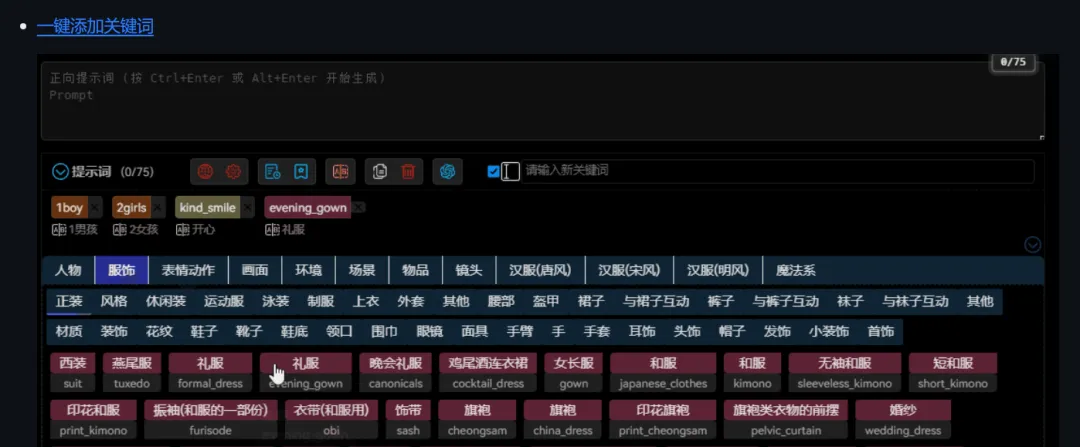
(For example, a plugin that can add prompts with one click)
When using LoRA models, trigger prompts are often required to be input; otherwise, the final generation result cannot incorporate the LoRA model’s effects:

(Trigger Words must be input into the positive prompts)
The reason for so many restrictions is that the range of prompts that can be input and affect the generation results is positively correlated with the “labels” in the model’s training set.
No one can input prompts beyond the “label” range. One cannot “create” content beyond the existing labels in the model; otherwise, the drawing program will be unable to understand the meaning of that prompt and cannot generate elements related to that prompt in the output.
The plaintiff also mentioned during the trial that the prompts used in their “creative process” were mostly directly copied from others’ templates:
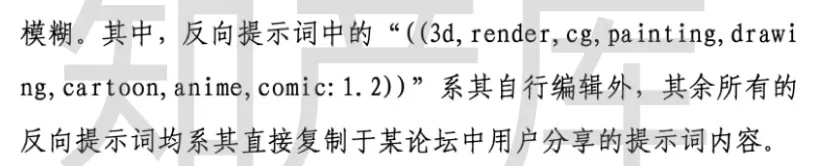
The negative prompts edited by the plaintiff themselves did not exceed common ranges either, merely selecting from within existing boundaries — not the result of their “independent creation.”
(6) Looking at the Entire “Creation” Process, the Plaintiff Did Not Engage in “Creative” Conduct and Should Not Obtain Copyright
Through the analysis above, we can now reach a conclusion: Whether inputting parameters, adjusting parameters, or selecting generation results, the plaintiff was merely operating within the “possibilities” provided by the model. The essence of AI-generated images relates only to the device, model, and software, not to the user. Anyone using the same device, model, and software can obtain identical results across time and space. Therefore, the AI-generated image in this case fully meets the definition of a “mechanical intellectual achievement.”
When a user directly uses AI-generated results, they are merely engaging in a process of selection based on human aesthetics, which has no connection to the creation of the image and lacks the elements of “creation.” Their act of inputting parameters merely defines the scope of “possibilities” and has no relationship with the production of the result, lacking the requirement of “influencing the generation result through intellectual input.”
Thus, whether analyzing the essence of the image or the plaintiff’s generation process, the plaintiff should not hold copyright in the work (more appropriately called ‘the image’).
III. Other Detailed Issues in the Judgment
Additionally, there are other detailed issues in the judgment:
(1) The Plaintiff’s Reproduction Process Lacks Evidentiary Value for Proving Creative Conduct
The judgment mentions that precisely because the plaintiff’s reproduction video showed the “parameter adjustment” behavior, demonstrating the plaintiff’s “aesthetic choices and personal judgment” process, it concluded that the image had “originality.”
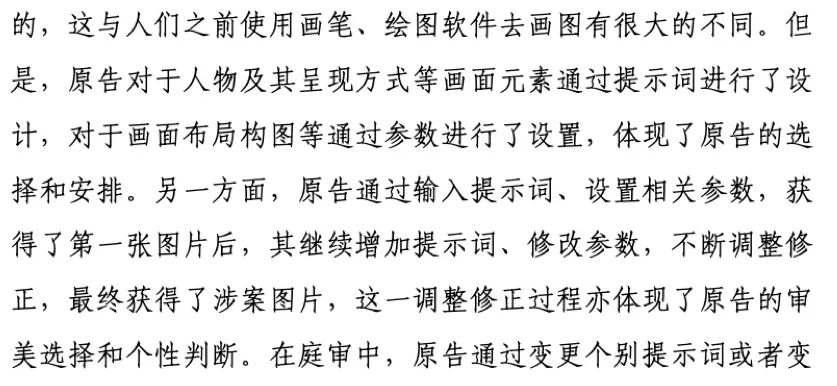
Unlike traditional electronic art data source files that contain information such as layers and operation logs, AI drawing (using Stable Diffusion as an example) only has the generated image and the generation parameter information carried within the image, containing no record of any “process.”
As mentioned above, when the final parameters are consistent, regardless of what complex debugging process the “reproduction video” shows, as long as the final parameters are the same, the same image can be generated.
The author illustrates again with a previous example:
- In Stable Diffusion, without changing the seed, modify one of the keywords from “night” to “day,” press the generate button, and obtain a completely different image:
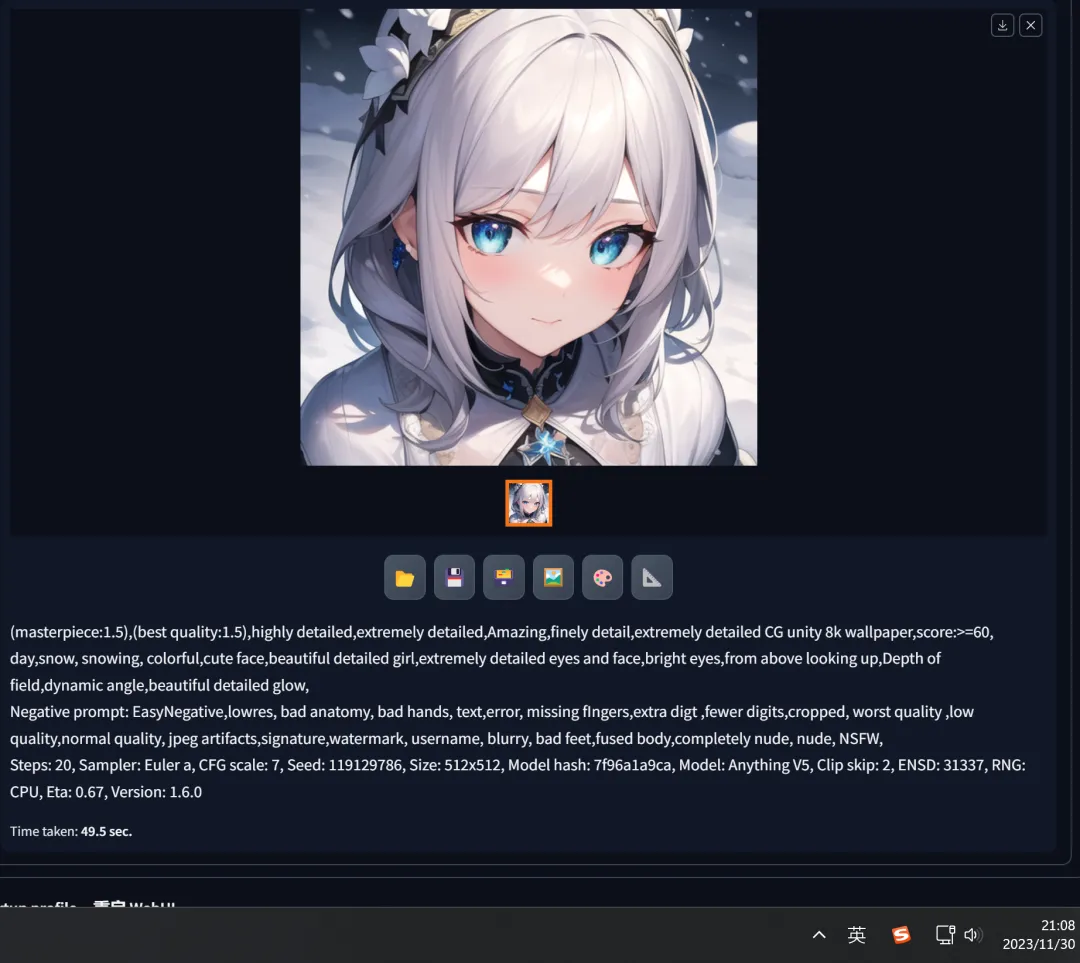
- Then, keep the current prompts unchanged, modify the “seed” to “119129788,” and press the generate button to obtain another different image:
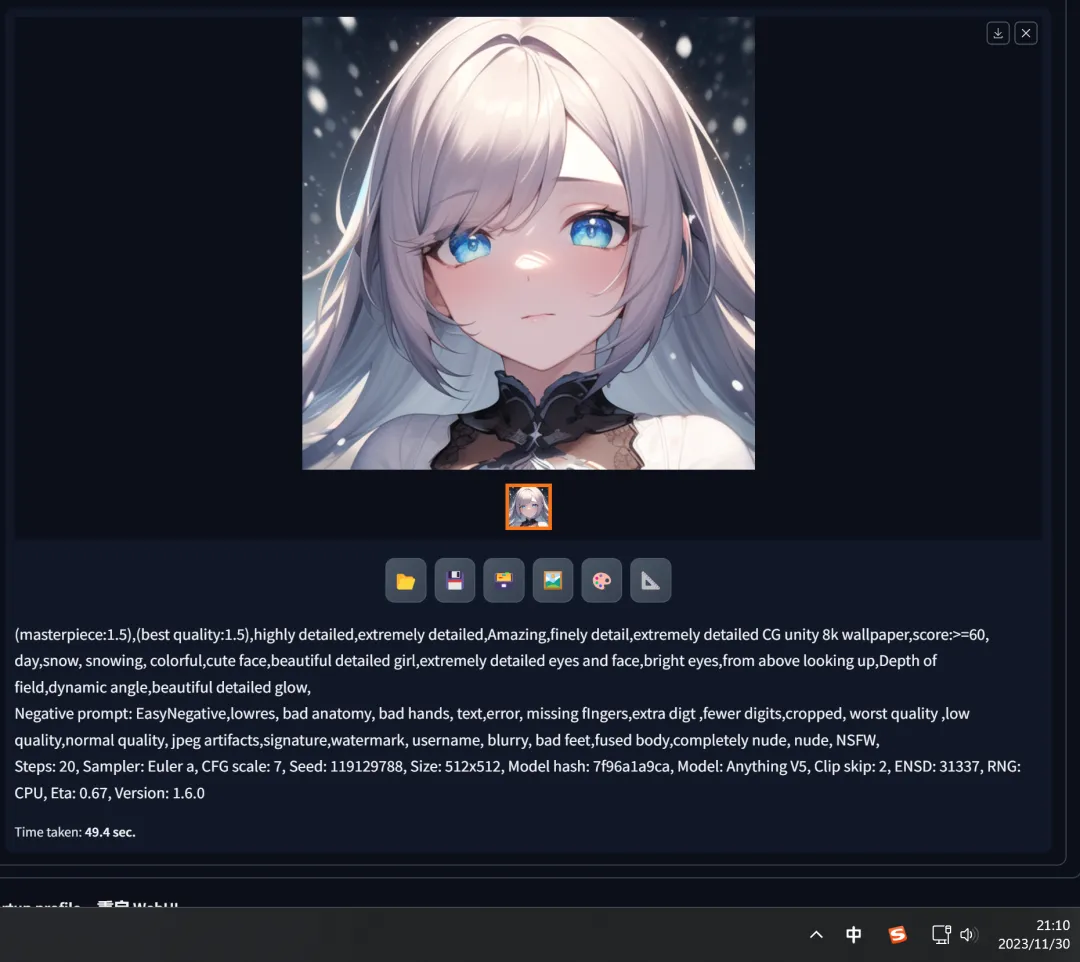
- Finally, modify the prompts and “seed” back to the original version and press the generate button again. It can be seen that the original image has been fully “reproduced”:
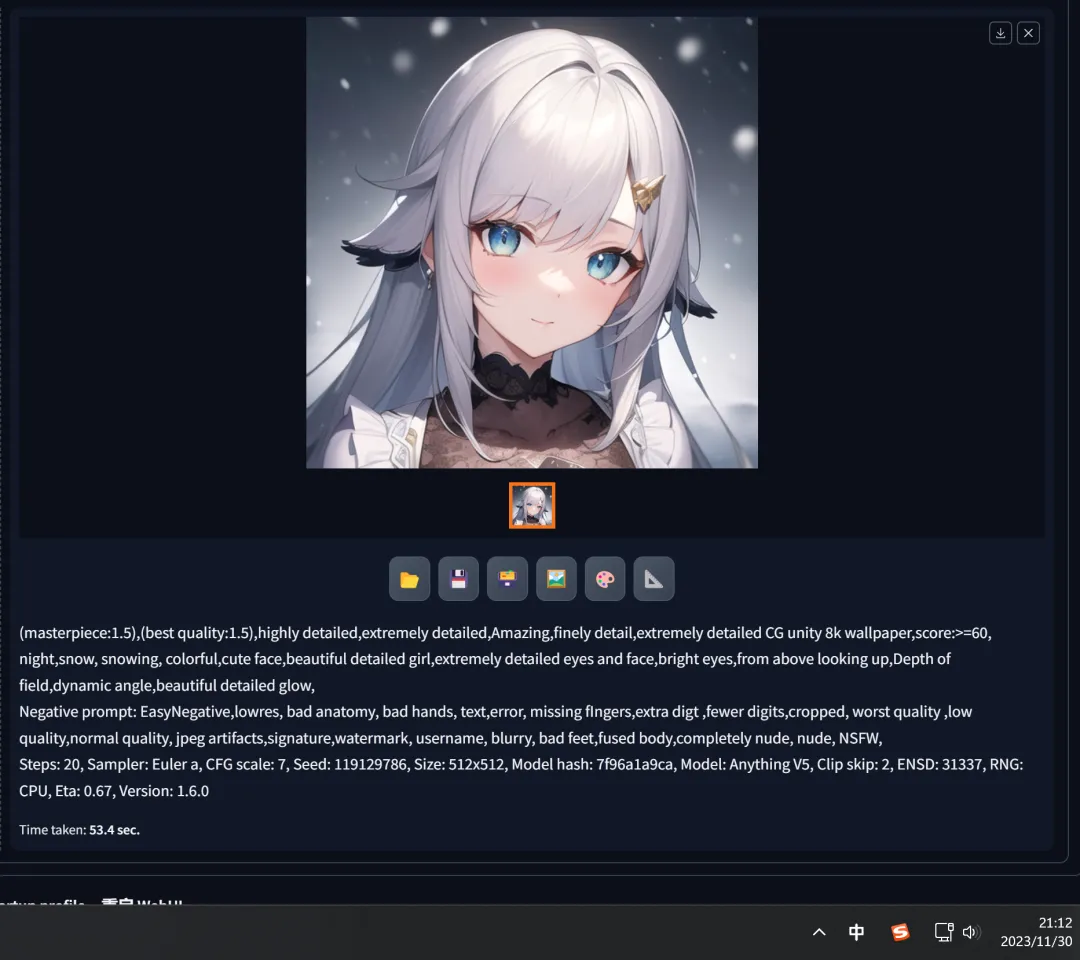
In fact, anyone can use Stable Diffusion’s “Image Info” function to read the generation information of any previously batch-generated image, send it to the “Text-to-Image” function, readjust parameters, and obtain different generation results. Naturally, it can also be used to reproduce the same image.
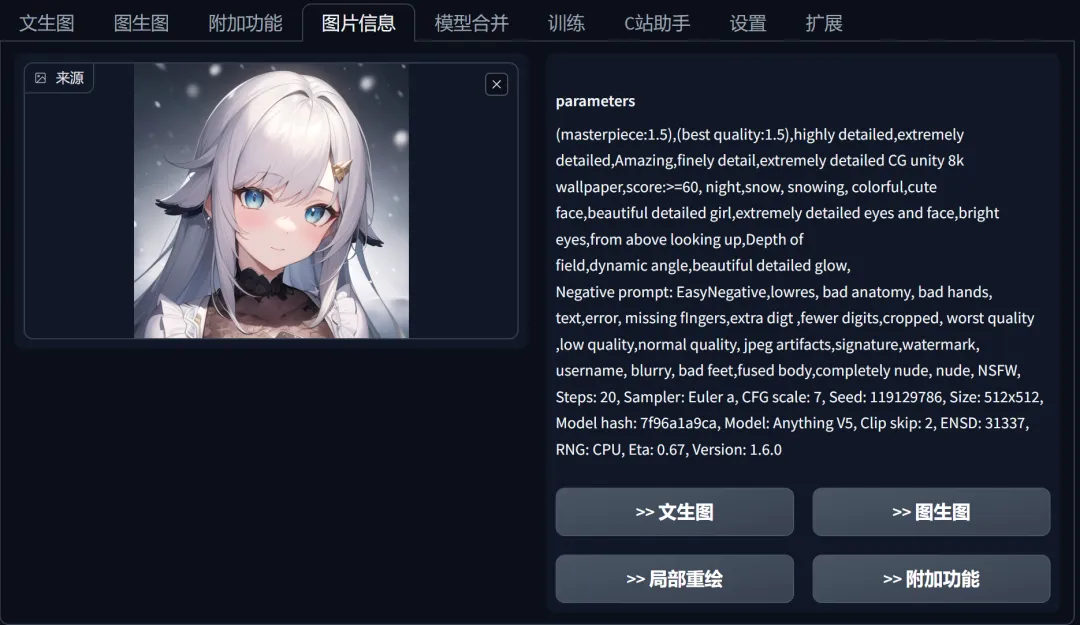
Although there is no evidence that the plaintiff “reverse-engineered the creative process,” in terms of “evidentiary value” alone, the plaintiff’s reproduction video lacks the probative force to prove the “creative process.”
(2) The Plaintiff’s “Creative Process” Obviously Differs from Common Practice
“AI drawing” is a “card-drawing” process. No one knows the result of “drawing a card” in advance. Therefore, the mainstream (and indeed overwhelming majority of) Stable Diffusion tutorials and ordinary software users’ generation operations involve using random seeds to batch-generate a large number of different images, then selecting one image that “conforms to human aesthetics” (based on a particular “seed”). Since we cannot know in advance which “seed” will meet our aesthetic preferences, batch-generating various different “seeds” randomly and then selecting from them is the optimal solution.
However, the plaintiff’s “reproduction process” was the opposite: first fixing the “seed,” then adjusting the LoRA model, and then generating the image by adjusting the “seed” and prompts again.
When generating, fixing the “seed” first means generating only one image at a time, which has no obvious advantage in terms of practicality or efficiency.
Especially when modern home computer graphics cards can generate an image in seconds, selecting from a large batch of generated images is far more effective than “randomly inputting a seed.”
However, the author does not rule out that someone might actually use such a method to generate images, or that the plaintiff adopted this approach merely for convenience of demonstration.
The author is merely stating this from ‘general rationality’ and does not suggest that the plaintiff ‘reverse-engineered the creative process.‘
IV. Potential Impacts of This Case
If this case becomes a “precedent” for future related judgments, it may bring the following impacts on the domestic copyright environment:
(1) May Change the Characteristic of “Automatic Ownership” of Copyright
According to Article 2 of the Copyright Law (著作权法), works enjoy copyright whether published or not — i.e., “automatic ownership.”
Article 2: Works of Chinese citizens, legal persons, or unincorporated organizations enjoy copyright in accordance with this Law, whether published or not.
Copyright Law of the People’s Republic of China
However, from the principles of AI drawing, based on the uniqueness of “seed” results, anyone could potentially have copyright in the same or similar image. The only factor affecting who obtains copyright in this image is simply who clicked the mouse and “luckily” generated this seed first.
This leads to a curious phenomenon:
The copyright owner of a work could be anyone, only collapsing into a specific result after a certain mouse click.
There could also be more than one copyright owner of a work, as long as everyone is ‘lucky’ enough to generate the same result.
Especially when the model is smaller, with fewer possible generations, the likelihood of generating similar images increases. When multiple parties generate similar images, disputes arise over “who is the copyright owner of this image” and “who has infringed whose rights.”
Based on prior priority?
However, the characteristic of electronic data is that it can be “modified at will.” Anyone can change the generation time of an image by adjusting the device time, e.g., going back two months:
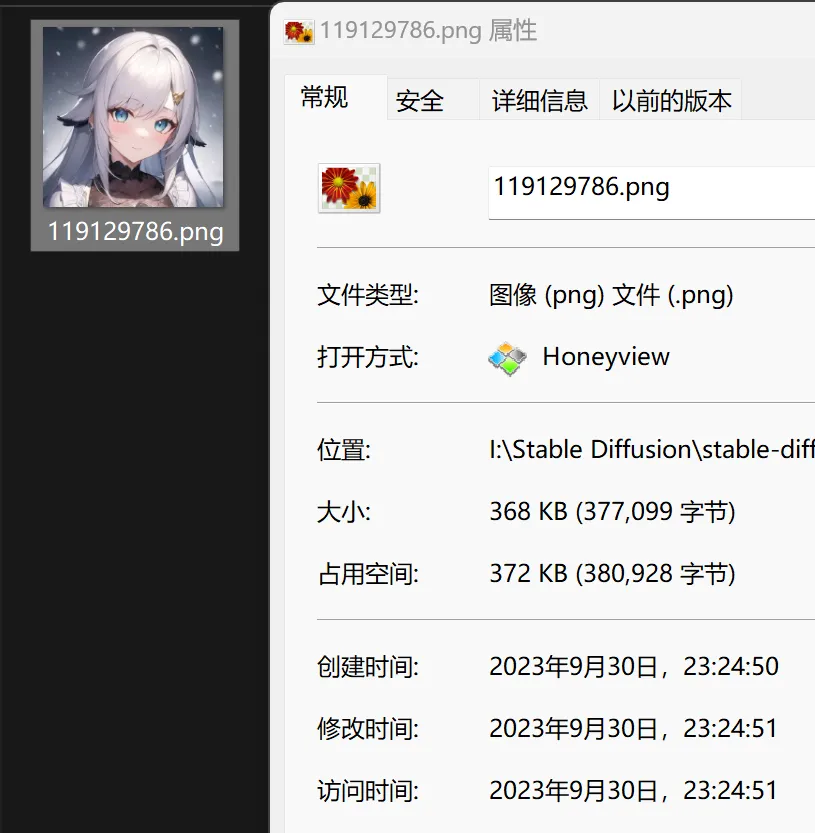
With current technology, most people cannot reliably determine the true generation time of an AI drawing work, making it difficult to ascertain the priority of rights in the image.
Based on prior publication or prior evidence preservation?
This would severely undermine the “automatic ownership” right of copyright, turning it into “whoever declares first owns it.” Anyone could lose copyright in their work merely by “publishing later,” keeping it only on their computer hard drive or in a draft, or simply thinking “I’ll use it next time.”
This would make ‘copyright’ no longer about ‘creation equals ownership.’ Instead, potential rights holders would have to compete for copyright through extensive reliability proof, or risk losing copyright without cause.
(2) May Shift Copyright from Protecting “Creation” to Protecting “Results”
The “result” of a traditional work is the embodiment of the creative process. Protecting the work is essentially protecting the complete “creative act,” which is the core idea of copyright: protecting expression.
However, AI works are generated based on the same creative process. While keeping other parameters consistent, simply adjusting the “seed” parameter usually yields entirely different results.
In this case, the judge considered that the plaintiff’s “creative process” involved “original intellectual input” and should therefore be protected.
But the question is: what kind of “creative process” should we protect?
Is it the adjustment process undergone in generating the AI image?
Is it the parameters used to ultimately generate the AI image (normally the creative process does not include thinking about the “seed”)?
Or is it the final AI image file generated by clicking the mouse (including the final parameters including the “seed”)?
If we believe in protecting the “thought process” and thus protect the parameters used for final generation, it would mean that one person can monopolize the copyright of all possible images (all “seeds”) under those parameters, which is clearly not feasible from a fairness standpoint.
If we believe in protecting only the final generated result, it would mean that anyone can use another person’s thought process — the “original intellectual input” recognized in this case — by simply inputting a new “seed” randomly, easily obtaining a new image result with certain differences that would be difficult to recognize as infringement under traditional legal standards.
In traditional art works, this might amount to just ‘adding a stroke’ in terms of effort, without requiring any meaningful ‘intellectual input,’ yet one could obtain full copyright in a new work.
However, from a judicial perspective, “protecting the result” is actually the easiest way to determine infringement. When an image’s generation information is removed, the only way to assess infringement is through “visual similarity.” But in AI drawing, changing the similarity of the final product is actually the part that requires the least ‘intellectual input.’
Protecting ‘parameters’ may lead to overprotection;
Protecting ‘finished products’ essentially does not protect the ‘thought process’ but merely protects ‘mechanically generated results’ that human effort cannot influence.
(3) Copyright Determination Methods Are Difficult to Apply to Different AI Drawing Software, Potentially Causing Discrimination
While Stable Diffusion requires some technical foundation to set up, more people may choose AI drawing platforms such as Midjourney, DALL·E, or Wenxin Yiyan (Ernie Bot).
These platforms are characterized by not requiring users to focus on specific generation parameters and models; they only need to input prompts to output image results.
Their output results are completely random. Even with the same prompts, the same image cannot be reproduced. There is also no possibility of adjusting details based on an existing image; each time, the image is regenerated from scratch based on the prompts.
When using these platforms, the user’s “original intellectual input” is significantly lower than that of Stable Diffusion users, since they cannot adjust various parameters.
If the same criteria as this case are applied, could these users also obtain copyright in the generated results? Even if the users merely input a paragraph of prompts?
If copyright protection should be granted, should it protect the prompts or the completely random, unreproducible generation result?
If a standalone paragraph of prompts cannot constitute “intellectual input,” then when using AI drawing, do those with higher technical capability or those using more complex software have more rights than others?
In traditional creative software, whether using the system’s built-in drawing software or a downloaded advanced version, the original images created all enjoy the same copyright.
But with AI drawing software, if only inputting prompts and adjusting parameters can constitute creation, this artificially creates barriers and discrimination, which is clearly unfair.
(4) May Lead to Computing Power Monopolizing Copyright
Without changing current copyright principles, based solely on the findings in this case, we can derive a terrifying conclusion:
In the future, whoever has more hardware computing power can generate more images faster and obtain more copyright.
If it is recognized that creators have copyright in AI-generated images, since it is impossible to falsify the “creative process” and “creation time,” creators with more computing power can continuously and randomly generate images based on various parameters of a model, exhausting the possibilities of generation results as much as possible, thereby monopolizing copyright in all images that the model can generate.
Moreover, due to the uniqueness of “seed” results, after discarding most results that do not conform to human aesthetics, the actually usable “seeds” may be limited. Ordinary people may lose copyright in images simply because of inferior hardware computing power and later generation of usable images from the model. This could even lead to infringement liability for using substantially similar images — readers familiar with current Stable Diffusion software should well understand how high the similarity and frequency of ultimately similar results can be, especially with small models, particularly small LoRA models.
The author believes this provides a future possibility of using assets to monopolize intellectual property.
The judge in the judgment considered that AI drawing software is a new technological tool, and by correctly applying the copyright system, more ordinary people can be encouraged to participate in the creative process.
While the starting point is good, this clearly only considers the “human” participation aspect, without considering the “machine” participation aspect.
The output efficiency of traditional works only relates to the person’s creative ability and efficiency. Everyone has equal opportunities to produce works and obtain copyright.
However, the output efficiency of AI drawing works has an extremely significant correlation with machine performance, even reaching tens or hundreds of times difference.
To cite the author’s personal experience: the current flagship consumer graphics card, Nvidia RTX 4090, can generate one image per second when using Stable Diffusion, while the author’s own graphics card often takes close to 50 seconds.
If it is believed that users of AI drawing software all have copyright in the generated images, this 50-fold difference represents a 50-fold difference in copyright acquisition efficiency. When everyone is using the same model to generate images, someone with an RTX 4090 may “draw” usable images earlier, while the author has a higher probability of infringement.
This unfair reality should not become the future of copyright in our country.
V. Personal View: Copyright Ownership of Training Sets, Models, and Generated Works in AI Drawing
Regarding the new intellectual property disputes brought by AI, the author would also like to share personal views on the copyright ownership of the three elements in AI drawing, hoping to spark discussion. Feedback is welcome from everyone:
(1) Training Set
A training set can be simply understood as the collection of various works used to train a model. The author believes it includes two types: completely original training sets and training sets containing third-party works.
A completely original training set means that all works in the training set are legally owned by the model creator. The author believes that copyright in such training sets belongs entirely to the model creator and does not infringe any third party’s rights. This likely needs no further discussion.
A training set containing third-party works, as the name suggests, contains some or all works that belong to third parties. The author believes that for such training sets, copyright in the third-party works belongs to the third parties, copyright in the training set itself (as a compilation work) belongs to the collector, and the act of collecting and using such training sets for training large models does not infringe third-party rights, unless works that the third party has expressly stated are not permitted for AI model training are used.
The author has expressed similar views in previous articles (see the linked article in the first half of this article). The training process of AI models, at least the Diffusion algorithm, merely learns commonalities. The commonalities of human works are inseparable from humanity’s shared culture, thoughts, and aesthetics. Even if a work contains innovative elements, such innovation becomes negligible in an absolute large model (the previous article has analyzed the infringement issues of LoRA models, and this will not be repeated here). The final generated large model will inevitably not infringe the copyright of third-party authors in the training set.
However, the author also respects every copyright holder’s right to protect their works. Declaring “not permitted for AI training” is the copyright holder’s right, and training set collectors have the obligation to respect such rights.
(2) Model
AI models specifically refer to models that have undergone training using training sets combined with specific algorithms and can be directly used for inference to generate AI drawing results.
The author believes that the copyright owner of such models is the model creator. However, unless a completely original training set is used, the model copyright owner does not enjoy copyright in the works generated by the model.
When a completely original training set is used, it means that the model’s generation results are characterized by the copyright owner owning copyright in the works. Although such characteristics are also based on societal commonalities, they contain more of the copyright owner’s “thought results” — the summary and conclusion of past “intellectual achievements” — and the copyright owner should naturally enjoy copyright in the relevant works.
When a training set containing third-party works is used, the model’s generation results are more representative of societal commonalities. Such commonalities are not the “thought results” of the model copyright owner but belong to the crystallization of the collective efforts of the training set and even all of humanity. No individual should have the right to exclusively enjoy copyright representing certain societal commonalities.
(3) Copyright of Generated Works
Unless the generated work is produced using a model trained on one’s own works, no one should enjoy copyright in directly AI-generated works.
Directly AI-generated works refer to various types of images generated solely by the AI model without secondary creation by the user.
The author supports the view that AI is merely a tool. However, the person using AI is merely a user, not the creator of the generated results. Everything “created” by AI, at least for now, is the result of calculations based on mathematics and statistics. Regardless of how much “intellectual effort” or “hard work” the user invested before the generation result, it is merely “continuously trying different parameters in the formula to obtain better results.” Neither the generation process nor the final result involves meaningful human intervention.
Directly AI-generated ‘works’ lack the elements of copyright and thus should not be protected by copyright law.
However, once secondary creation is performed based on the AI work — including redrawing parts of the image, fixing structural errors, adding more elements and content, etc. — when the human-added portion exceeds the proportion of the AI work itself, the user should enjoy copyright in the new work.
At this point, the AI work merely becomes part of the material for the new work (like a reference image used in normal drawing). The human’s “intellectual input” has exceeded the “mechanical generation” portion, thus meeting the requirements for obtaining copyright.
VI. Conclusion
In this case, the defendant directly used the plaintiff’s image. The author has no objection to this based on the current evidence.
However, the author believes that based on the technical principles discussed in this article, the plaintiff similarly does not hold copyright in the image, and the defendant did not constitute infringement.
Regardless of whether this case, as some netizens believe, is “the first manufactured case,” regarding the new intellectual property issues brought by AI, we should all recognize one thing: Copyright-related legal protection methods and understanding need to catch up with technical principles more quickly.
For intellectual property issues related to new technologies, we cannot continue to follow past experience. Instead, we should start from technical principles, deeply analyze the essence of the technology, and combine it with the core protection principles of intellectual property to determine whether the technology constitutes intellectual property and whether related conduct constitutes infringement.
Otherwise, we will only fall into the trap of ‘empiricism’ and ‘subjectivism.’