
Analysis of Cross-Regional Judicial Jurisdiction Models in Administrative Litigation Cases and Practical Tips for Lawyers
Analysis of Cross-Regional Judicial Jurisdiction Models in Administrative Litigation Cases and Practical Tips for Lawyers
Introduction: The traditional model of administrative litigation jurisdiction based on the location of the defendant's administrative entity has been questioned for potentially lacking impartiality due to possible local administrative interference. Therefore, reforms exploring cross-regional judicial jurisdiction for administrative litigation cases have emerged. Courts across the country have exercised local judicial initiative, actively implementing models such as centralized jurisdiction and异地审理 (hearings in different locations), which have not only strengthened judicial supervision over administrative power and optimized the allocation of judicial resources, but also enhanced public trust in administrative trials. This represents an important measure in the modernization of China's judicial system.
Introduction:
The traditional model of administrative litigation jurisdiction based on the location of the defendant’s administrative entity has been questioned for potentially lacking impartiality due to possible local administrative interference. Therefore, reforms exploring cross-regional judicial jurisdiction for administrative litigation cases have emerged. Courts across the country have exercised local judicial initiative, actively implementing models such as centralized jurisdiction and hearings in different locations (异地审理), which have not only strengthened judicial supervision over administrative power and optimized the allocation of judicial resources, but also enhanced public trust in administrative trials. This represents an important measure in the modernization of China’s judicial system. This article reviews the Supreme People’s Court’s and various local courts’ relevant administrative jurisdiction regulations, summarizes several different models of cross-regional judicial jurisdiction for administrative litigation cases in practice, examines their specific application in legal practice and existing problems, and provides tips on key points that lawyers should note in their practice.
I. Background of Judicial Jurisdiction Reform for Administrative Litigation Cases
In order to reduce local government interference in administrative trials and enhance courts’ ability to independently and impartially hear administrative cases in accordance with the law, beginning in 2013, under the unified guidance of the Supreme People’s Court (hereinafter referred to as “SPC”), local courts have carried out a series of administrative litigation jurisdiction reforms, changing the approach of having the defendant’s domicile as the basis for jurisdiction and exploring new measures for courts to hear administrative cases across regions. This has initially established a judicial jurisdiction system that is appropriately separated from administrative divisions.
On January 4, 2013, the Supreme People’s Court issued the “Notice on Launching the Pilot Work of Relatively Centralized Jurisdiction of Administrative Cases” (Fa [2013] No. 3), requiring that, through the unified designation by higher-level people’s courts, certain first-instance administrative cases under the jurisdiction of some basic-level people’s courts be transferred to other basic-level people’s courts for centralized jurisdiction.
On May 1, 2015, Article 18, Paragraph 2 of the revised “Administrative Litigation Law” stipulated: “Upon approval of the Supreme People’s Court, a high-level people’s court may, based on the actual circumstances of its judicial work, designate several people’s courts to hear administrative cases across regions.” This provision was retained in the 2017 amendment of the “Administrative Litigation Law.”
On June 17, 2015, the Supreme People’s Court issued the “Guiding Opinions on Cross-Administrative-Region Centralized Jurisdiction of Administrative Cases by People’s Courts” (Fa Fa [2015] No. 8), requiring: “The reform of centralized jurisdiction of administrative cases should primarily involve ordinary people’s courts, while also fully exploring other available judicial resources such as railway transportation courts.” “In Beijing and Shanghai, which have already established cross-administrative-division people’s courts, administrative cases may be gradually centralized to cross-administrative-division courts and the railway transportation basic-level courts of both places.” “Non-centralized jurisdiction courts’ administrative divisions may hear cases where parties choose to have them heard by local courts, or cases where the facts are clear, rights and obligations are definite, and disputes are minor and may be heard under simplified procedures, handle some non-litigation administrative application execution cases, and assist centralized jurisdiction courts in handling related delegated matters.”
Related documents of the Supreme People’s Court on administrative litigation jurisdiction reform:
II. Models of Cross-Regional Jurisdiction of Administrative Litigation in Various Courts
Because the relevant legislation on administrative litigation and the SPC’s guiding opinions do not uniformly stipulate the specific model for cross-regional jurisdiction of administrative litigation at the top-level design level, but instead empower intermediate and higher people’s courts to explore and design on their own, various courts have explored multiple cross-regional jurisdiction models during the reform, showing a diversified development trend. The current cross-regional jurisdiction models and representative regions are introduced as follows:
(I) General Centralized Jurisdiction Model: Centralized in Specific Basic-Level Courts or Railway Transportation Courts
1. Centralized Jurisdiction by Ordinary Courts
This jurisdiction model refers to the unified designation of administrative cases originally under the jurisdiction of all basic-level courts in a city to one or several basic-level courts for centralized jurisdiction. Administrative cases within the jurisdiction of the basic-level court undertaking centralized jurisdiction continue to be heard by that court.
Representative Region: Shenzhen City, Guangdong Province
“Announcement of Shenzhen Intermediate People’s Court of Guangdong Province on Implementing Centralized Jurisdiction of Administrative Cases” (published on June 26, 2015)
Representative Region: Nantong City, Jiangsu Province
“Announcement of Nantong Intermediate People’s Court on Designating Nantong Economic and Technological Development Zone People’s Court for Centralized Jurisdiction of First-Instance Administrative Cases Across the City” (effective July 1, 2018)
2. Centralized Jurisdiction by Railway Transportation Courts
In 2015, the Supreme People’s Court issued the “Opinions on Comprehensively Deepening the Reform of People’s Courts——The Fourth Five-Year Reform Outline of People’s Courts (2014-2018),” which explicitly transformed railway courts into cross-administrative-division courts. Railway transportation courts have become an important reliance for promoting cross-regional administrative jurisdiction. Centralized jurisdiction by railway transportation courts refers to the unified designation of administrative cases originally under the jurisdiction of all basic-level courts or intermediate courts in a city to the corresponding level of railway transportation courts for centralized jurisdiction, in order to achieve judicial “de-localization.”
Representative Region: Guangzhou City, Guangdong Province
Guangdong Provincial Higher People’s Court’s “Announcement on Railway Transportation Courts of Guangdong Province’s Centralized Jurisdiction of Administrative Cases in Guangzhou” (published on December 25, 2015)
Representative Region: Heilongjiang Province
“Announcement of Heilongjiang Provincial Higher People’s Court on Cross-Administrative-Region Jurisdiction of Administrative Cases by the Two-Level Railway Transportation Courts of the Province” (published on December 23, 2021)
(II) Centralized Cross-Jurisdiction Model: Cross-Jurisdiction Among Centralized Jurisdiction Courts
1. Centralized Cross-Jurisdiction by Ordinary Courts
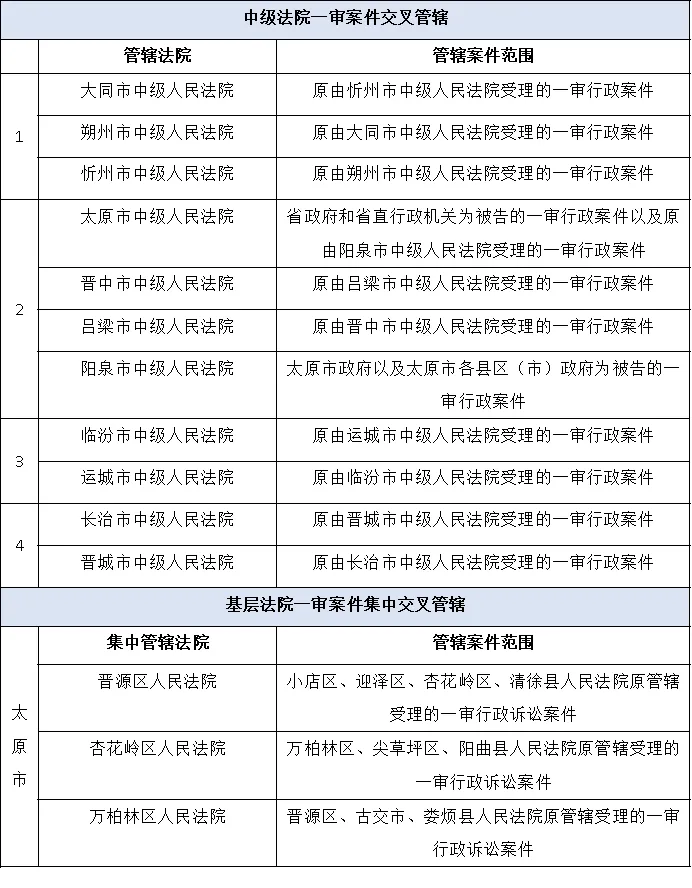
This jurisdiction model refers to several ordinary courts centrally hearing first-instance administrative cases under the jurisdiction of all courts in the city, while implementing cross-jurisdiction among the several centralized jurisdiction courts.
Representative Region: Shanxi Province
“Announcement of Shanxi Provincial Higher People’s Court on Cross-Administrative-Region Centralized Jurisdiction of Administrative Cases” (published on April 20, 2016)
2. Centralized Cross-Jurisdiction by Ordinary Courts and Specialized Courts
This jurisdiction model refers to several ordinary courts and specialized courts centrally hearing first-instance administrative cases, with cross-jurisdiction implemented among the centralized jurisdiction ordinary basic-level courts.
Representative Region: Shanghai
“Shanghai High Court’s Adjustment of Centralized Jurisdiction of Intellectual Property Cases, Administrative Cases, and Minor Criminal Cases of Basic-Level Courts” (effective from July 1, 2018)
(III) Cross-Jurisdiction Model in Different Locations
This model transfers the jurisdiction of administrative litigation cases heard by ordinary courts (including cases subject to exclusive jurisdiction over immovable property) to people’s courts other than the original jurisdiction location.
Representative Regions: Nankai District, Hongqiao District, Hedong District, Hexi District, Tianjin
Except for first-instance administrative litigation cases involving intellectual property
“Tianjin Higher People’s Court’s Announcement on Conducting Pilot Work of Cross-Jurisdiction of Administrative Litigation Cases in Some Basic-Level People’s Courts of the City” (published on June 23, 2022)
Representative Region: Haikou City, Hainan Province—Implementing “Rotating” Cross-Jurisdiction
Jurisdiction relationships among courts in Haikou City:
Longhua → Xiuying → Qiongshan → Meilan → Longhua
“Hainan Higher People’s Court’s Implementation Plan for Cross-Administrative-Region Cross-Jurisdiction Reform of Administrative Cases Province-Wide” (published by “Hainan High Court” WeChat Official Account on April 8, 2022)[1]
(IV) Party Choice of Jurisdiction Model
This model grants parties the right to choose jurisdiction, allowing plaintiffs to either choose the court in the location of the administrative agency when filing a lawsuit, or file a lawsuit with other basic-level people’s courts or railway transportation courts.
1. Parties may choose to file a lawsuit in the location of the sued administrative agency, or choose to file with other courts in the same area
Representative Region: Qingdao City, Shandong Province
“Qingdao Intermediate People’s Court’s Guide to Civil and Administrative Case Jurisdiction by Level” (published on March 30, 2022)
2. Parties may choose courts within the entire municipal area
Representative Region: Lishui City, Zhejiang Province
Lishui Intermediate People’s Court’s “Opinions on Implementing the Cross-Jurisdiction System for Administrative Litigation” (published on January 12, 2024)
3. Parties may choose the original jurisdiction court or the cross-jurisdiction centralized jurisdiction court
Representative Region: Hangzhou City, Zhejiang Province
: Adhering to the principle of territorial jurisdiction with parties’ choice of cross-jurisdiction in different locations as a supplement.
“Hangzhou Intermediate People’s Court of Zhejiang Province’s Announcement on Adjusting Jurisdiction of Administrative Litigation Cases” (effective from January 1, 2024)
(V) Centralized Jurisdiction Model for Administrative Cases with High Professionalism
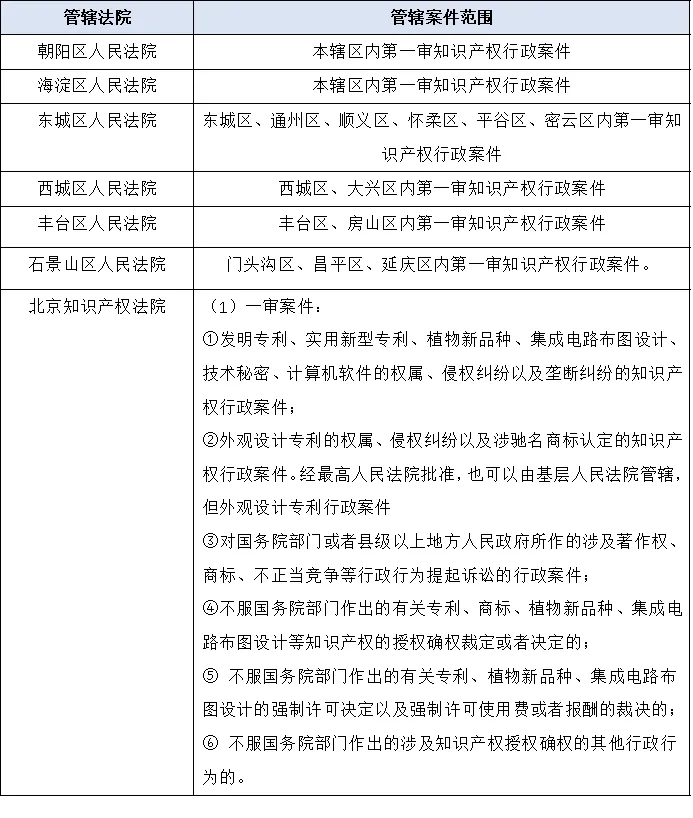
For administrative cases with high professionalism, such as intellectual property administrative cases, administrative cases with tax departments as defendants, maritime administrative cases, and financial administrative cases, in Beijing, Shanghai, Guangzhou, and other regions where specialized courts exist, these cases are mainly centralized to specialized courts (such as railway transportation courts, maritime courts, intellectual property courts, and financial courts), or centralized to specific ordinary courts, in order to enhance the professionalism of corresponding administrative trials.
1. Intellectual Property Administrative Cases
Representative Region: Beijing
Supreme People’s Court’s “Provisions on Case Jurisdiction of Beijing, Shanghai, and Guangzhou Intellectual Property Courts” (effective from January 1, 2021)
2. Maritime Administrative Cases
Representative Region: Shanghai—Centralized Jurisdiction by Shanghai Maritime Court
Shanghai Higher People’s Court’s “Provisions on Shanghai Maritime Court’s Jurisdiction over Maritime Administrative Cases” (effective from January 4, 2017)
Representative Region: Jiangsu Province—Centralized Jurisdiction by Nanjing Maritime Court
Jiangsu Higher People’s Court’s “Minutes on Legally Determining the Scope of Acceptance of Maritime Administrative Cases” (effective from November 23, 2022)
3. Tax Administrative Cases
Representative Region: Shanghai
Shanghai Higher People’s Court’s “Provisions on Centralized Jurisdiction of Administrative Cases with Tax Departments as Parties in This City” (effective from February 23, 2024)
4. Internet Administrative Cases
Representative Regions: Beijing, Guangzhou, Hangzhou—Centralized Jurisdiction by Internet Courts
Article 2 of the Supreme People’s Court’s “Provisions on Several Issues Concerning the Trial of Cases by Internet Courts” stipulates: “Beijing, Guangzhou, and Hangzhou Internet Courts have centralized jurisdiction over the following first-instance cases that should be accepted by basic-level people’s courts within their respective municipal jurisdictions: … (10) Administrative disputes arising from administrative acts by administrative organs regarding internet information service management, internet commodity trading, and related service management;”
Representative Region: Chengdu City—Chengdu Railway Transportation First Court’s Embedded Chengdu Internet Court Has Centralized Jurisdiction
The Supreme People’s Court’s “Approval on Agreeing to Chengdu Railway Transportation First Court’s Establishment of Specialized Trial Institution and Cross-Region Jurisdiction over Some Internet Cases,” clarifies that the Chengdu Railway Transportation First Court, with its specialized institution for hearing internet cases—the Chengdu Internet Court, has cross-administrative-region centralized jurisdiction over the following first-instance internet cases that should be accepted by basic-level people’s courts within the jurisdictions of Chengdu City, Deyang City, Meishan City, and Ziyang City:
: (7) Administrative disputes arising from administrative acts by administrative organs regarding internet information service management, internet commodity trading, and related service management;
5. Financial Administrative Cases
Representative Region: Shanghai—Centralized Jurisdiction by Shanghai Financial Court
First-instance financial administrative cases within Shanghai’s jurisdiction that should be accepted by intermediate people’s courts, where parties are dissatisfied with administrative acts by financial regulatory agencies and organizations authorized by laws, regulations, and rules in fulfilling their financial regulatory duties, are under the jurisdiction of the Shanghai Financial Court.
Appeals against judgments and rulings on financial administrative cases by Shanghai’s basic-level people’s courts, as well as retrial cases of financial civil and commercial cases and financial administrative cases that should be accepted by intermediate people’s courts within Shanghai’s jurisdiction, are tried by the Shanghai Financial Court.
Supreme People’s Court’s “Provisions on the Jurisdiction of Shanghai Financial Court Cases” (effective from April 21, 2021)
6. Environmental Resources Administrative Cases
Representative Region: Inner Mongolia Autonomous Region
“Announcement of Inner Mongolia Higher People’s Court on Implementing Centralized Jurisdiction of Some Environmental Resources Cases Across the Court’s Jurisdiction” (effective from January 1, 2024)
(VI) Exception to Cross-Jurisdiction: Territorial Jurisdiction
Some courts implementing cross-jurisdiction in different locations apply territorial jurisdiction for certain administrative disputes (such as disputes arising from immovable property such as houses and land) without exception, and do not apply cross-jurisdiction in different locations.
Representative Region: Hangzhou City, Zhejiang Province
The following administrative cases uniformly apply territorial jurisdiction without implementing cross-jurisdiction in different locations:
(1) Administrative cases of filing lawsuits regarding immovable property as stipulated in Article 20 of the Administrative Litigation Law;
(2) Administrative cases involving administrative decisions, compensation decisions, administrative agreements, administrative enforcement, administrative compensation, government information disclosure, and failure to perform compensation and resettlement duties arising from land and housing collection and relocation;
(3) Administrative cases involving administrative penalties, administrative enforcement, administrative compensation, government information disclosure, and failure to perform statutory duties arising from illegal land occupation and illegal construction;
(4) Other administrative cases not suitable for cross-jurisdiction in different locations.
“Hangzhou Intermediate People’s Court of Zhejiang Province’s Announcement on Adjusting Jurisdiction of Administrative Litigation Cases” (effective from January 1, 2024)
III. Practical Tips on Cross-Regional Jurisdiction of Administrative Litigation from a Lawyer’s Perspective
-
Accurately determine the jurisdiction court. Since there is no uniform national standard for cross-regional administrative jurisdiction, the cross-regional jurisdiction models established by various courts across the country show characteristics of diversification and variability. When choosing a court to file a lawsuit, one should check the latest notices from local higher courts and intermediate courts, and for unfamiliar foreign courts, one may contact that court’s filing office to confirm the current jurisdiction status, so as to avoid choosing the wrong jurisdiction court.
-
Pay attention to litigation risk assessment. The standards for implementing cross-regional jurisdiction of administrative litigation cases vary across different localities. Some local courts actively implement cross-jurisdiction with better judicial environment for independent administrative trial and less resistance to making fair judgments, while in some localities, although cross-jurisdiction is implemented for administrative cases, the administrative division judges are stationed through circuit trial points, and they still work and hear cases at the court in the location of the administrative agency. Moreover, the administrative case trial organization is still the one that originally heard administrative cases for the original administrative agency’s location. In addition, some local courts only pilot cross-jurisdiction reform in some areas, while other areas outside the pilot still use the defendant’s location as the jurisdiction court. The above situations may still be difficult to avoid the influence of local government intervention, and possible litigation risks need to be clearly understood.
-
Help parties make the most beneficial choices. When parties have the right to choose the jurisdiction court, one may consider checking the annual judicial trial white papers of various courts, judge introductions on court official websites, and the court judgment document network. Through comprehensive analysis and assessment of courts’ administrative trial capabilities and levels, one may then choose a court that better meets expectations, so that the represented cases can receive fairer and more efficient handling.
Notes:
[1] It is reported that Haikou City will no longer implement this “rotating” jurisdiction model in 2024, and will still use the court in the location of the administrative agency as the jurisdiction court. The specific jurisdiction standards of local courts shall prevail.